



360 Design
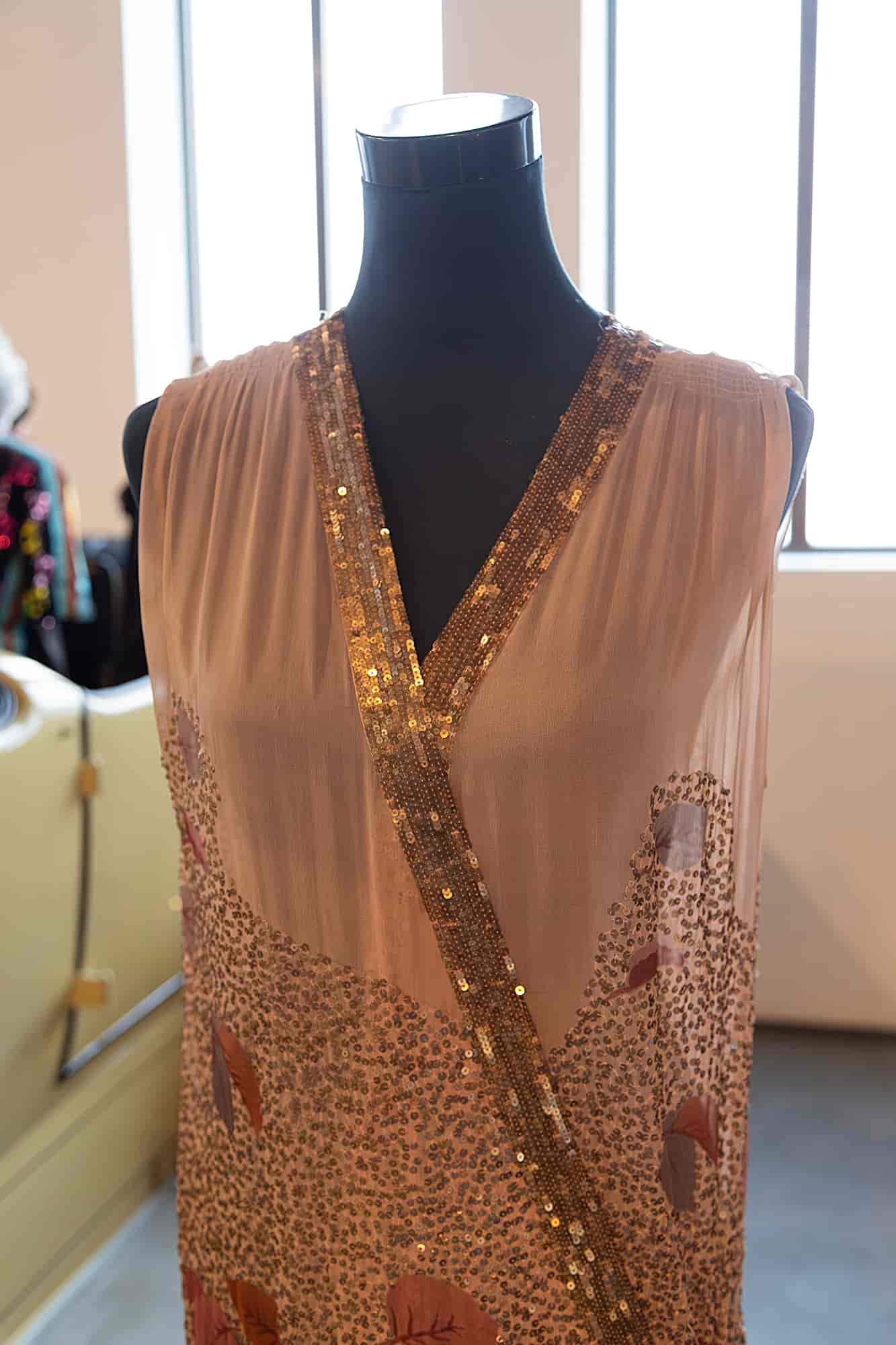
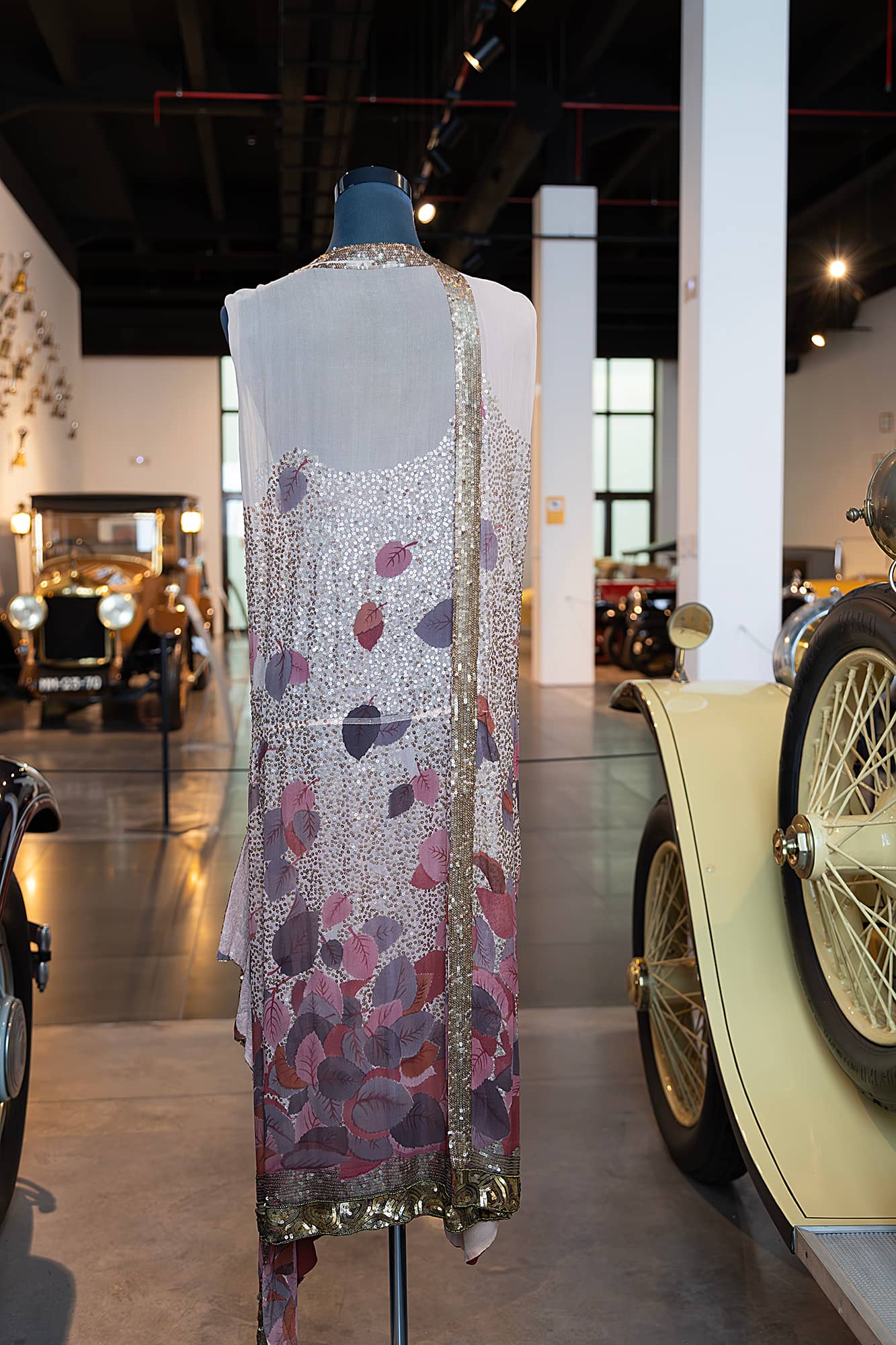
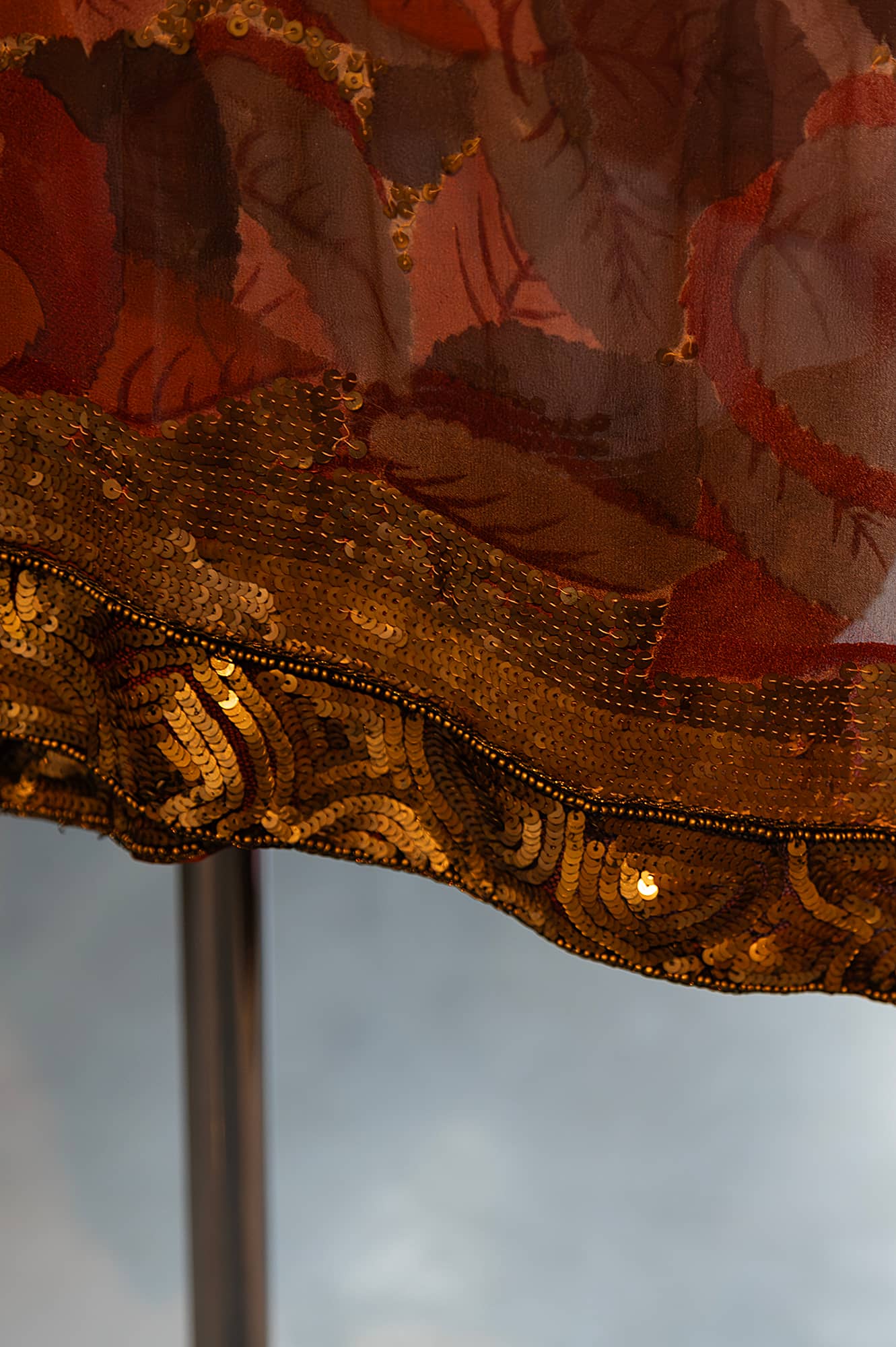
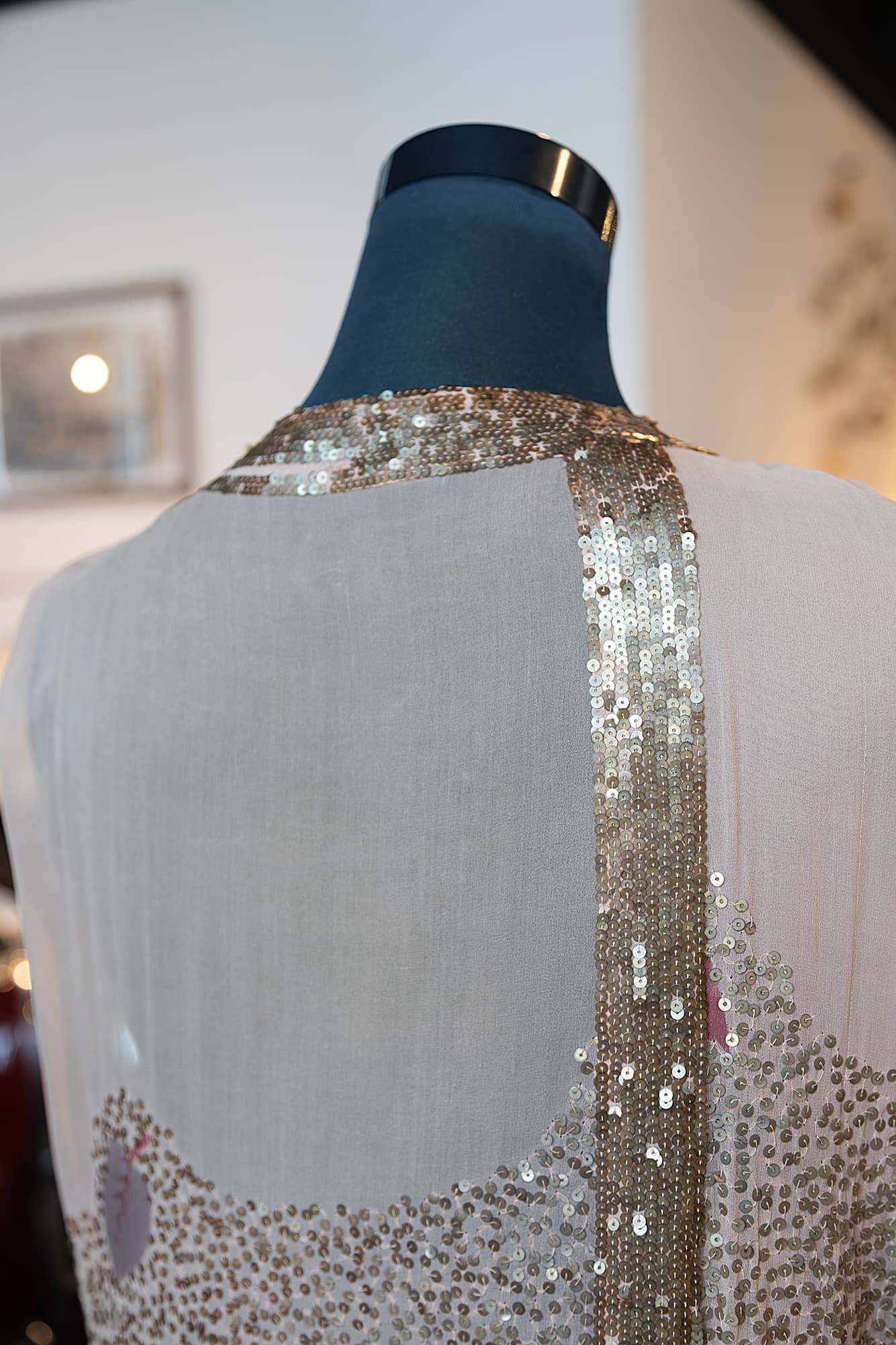
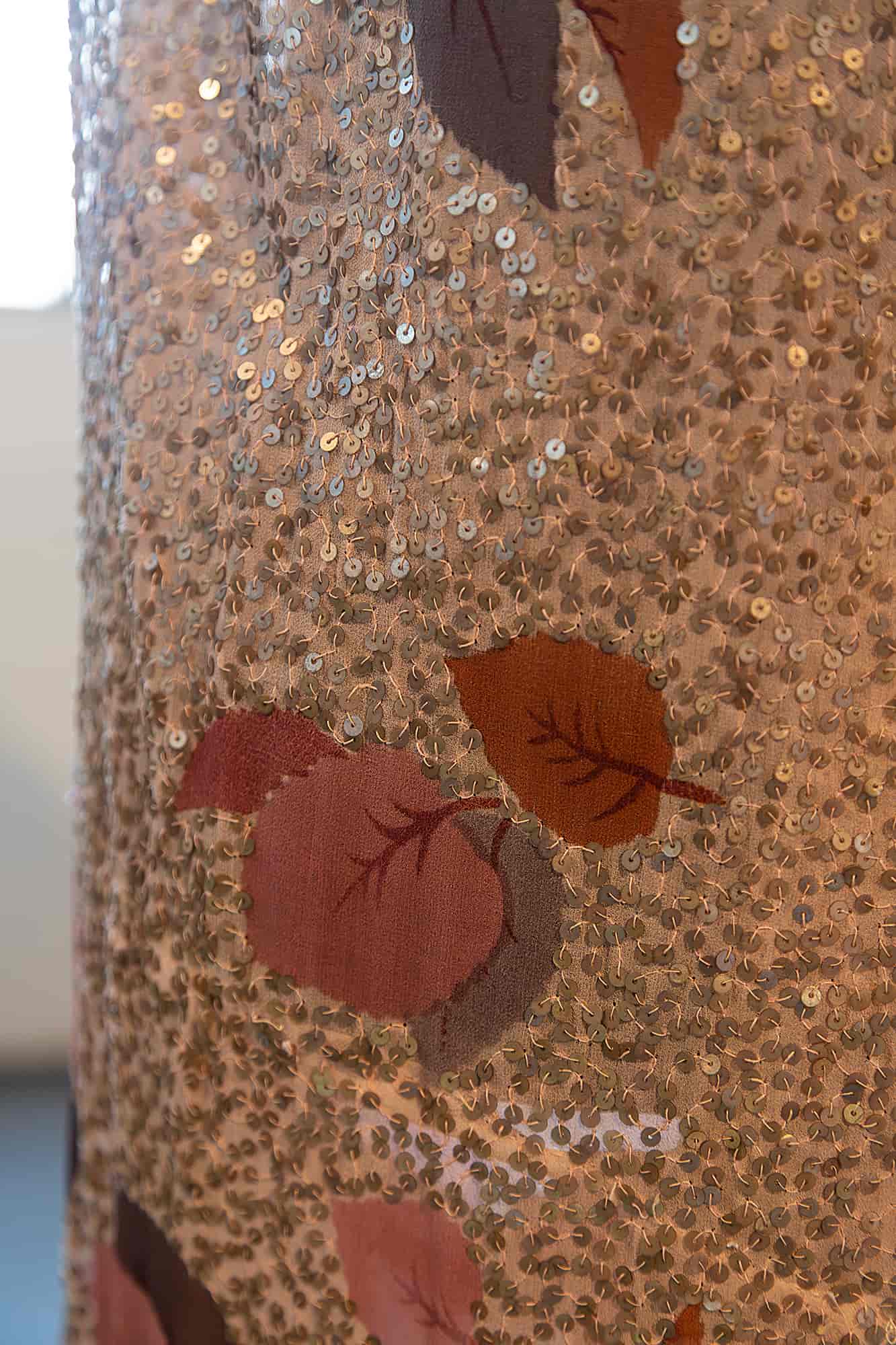
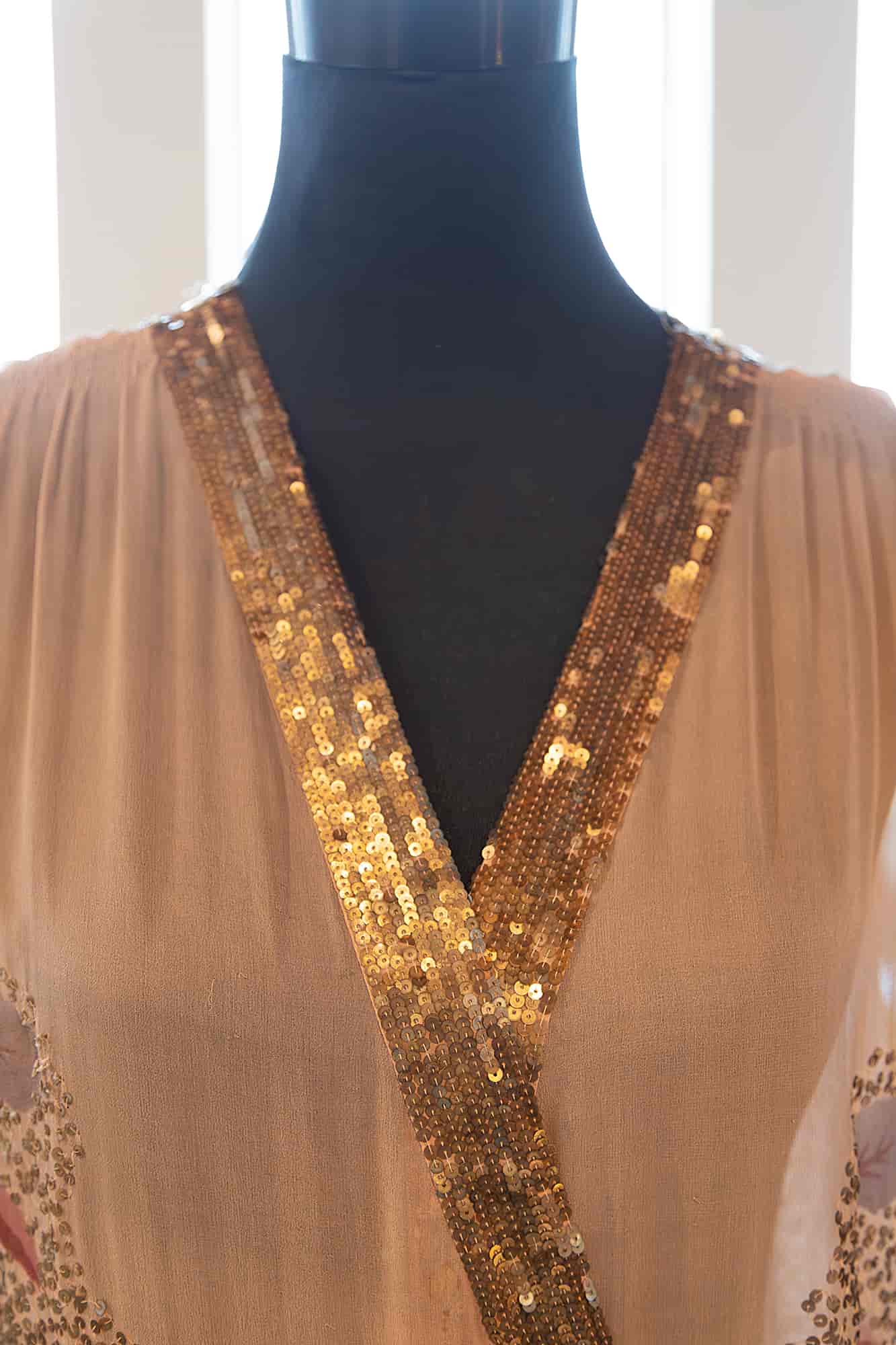
This cream silk crepe kimono dress with printed leaves and sequin appliqués is attributed to Jeanne Lanvin.
Born in Paris in 1867, she was a pioneer of French fashion and founder of the Maison Lanvin in 1889. After revolutionising Paris in 1908 with her line of children’s wear and the use of the iconic ‘Lanvin blue’, she extended her offerings to women’s wardrobes, introducing ‘mother-daughter’ outfits.
During the 1920s, the period to which this dress belongs, Lanvin also explored men’s fashion and collaborated with architect Armand-Albert Rateau to create a pavilion offering furniture and decorations. These innovations would set a precedent in fashion, giving the possibility to follow a complete lifestyle, the ‘Lanvin style’.
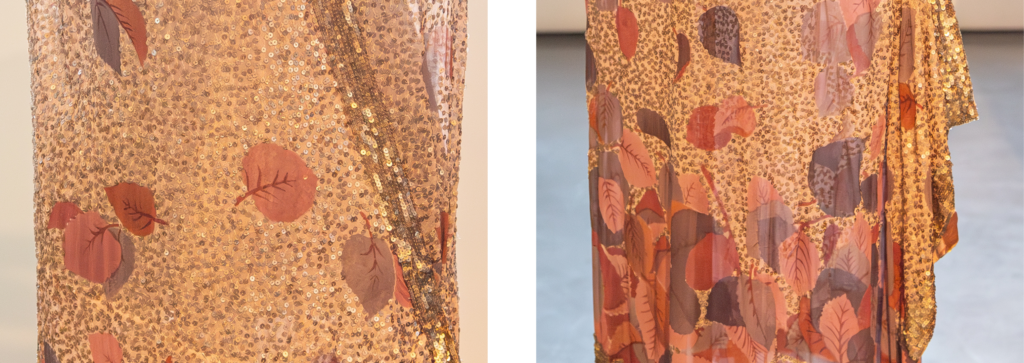
A dress very similar to this one, but in other shades, can be found at the Kent State University Museum, in Ohio, USA.
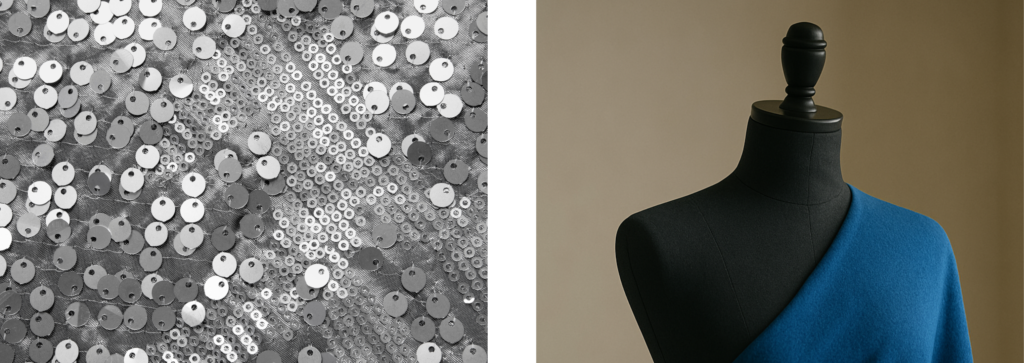
The sequins that make up this dress are not sequins as we know them today, they are metallic sequins. It was not until the 1930s that technological advances made it possible to create gelatin sequins. Although they were much lighter than their predecessors, they had major drawbacks: due to the nature of the material, they did not react well to heat or moisture, which caused them to deform or melt easily. For this reason, dresses made from these sequins could only be worn on rare occasions.
As an alternative to gelatine, the Algy Trimmings Co and Eastman Kodak companies came up with acetate sequins, whose main advantage was their lightness, as was the case with gel sequins, but they were more resistant than the latter to heat and humidity. The main disadvantage of these acetate sequins was their fragility, which made them break relatively easily.
Finally, vinyl plastic sequins were much more resistant than acetate sequins in all respects, making them the ideal material for sequins, which is why they are still manufactured in this material today.