




A love at first sight
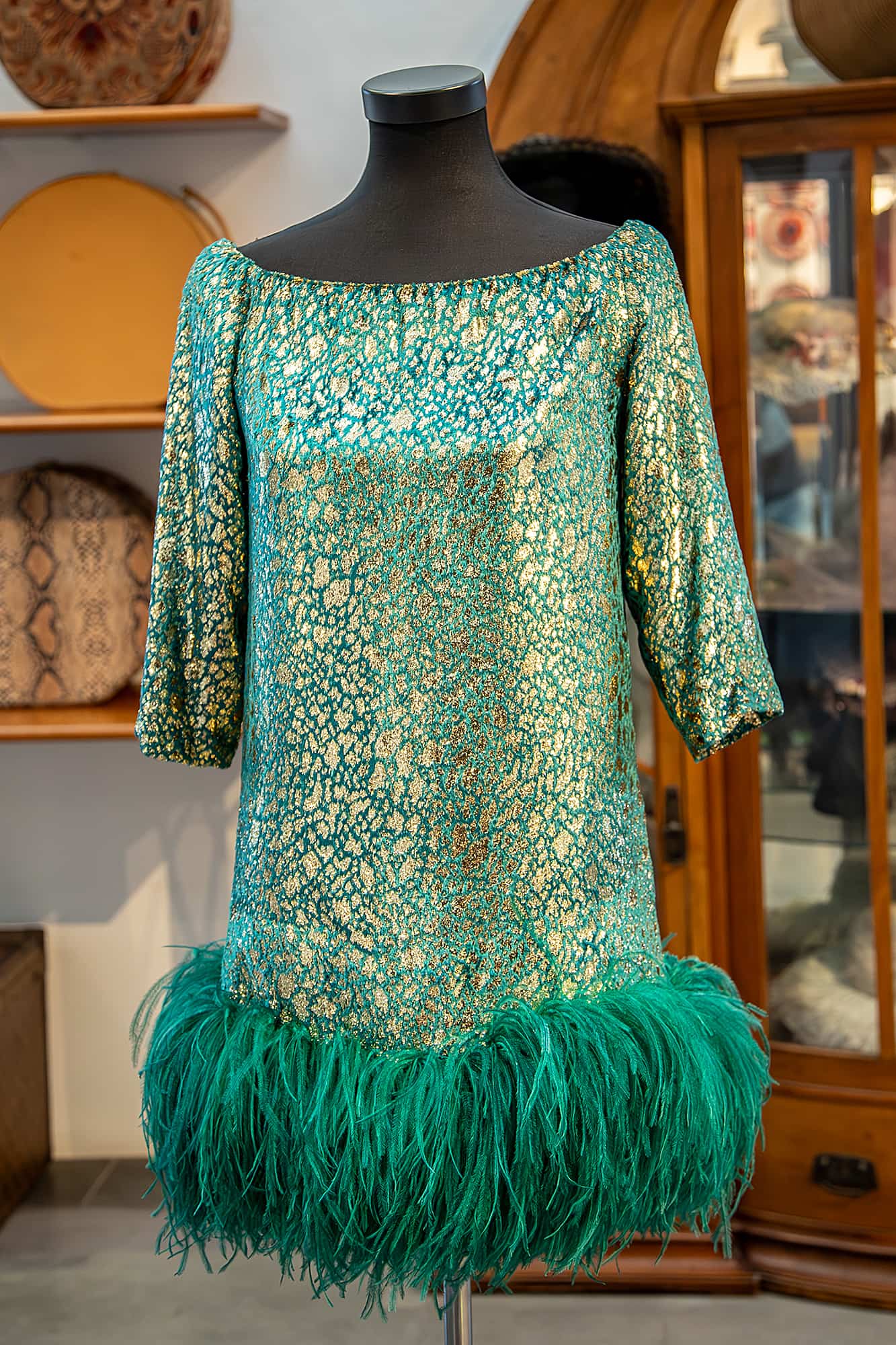
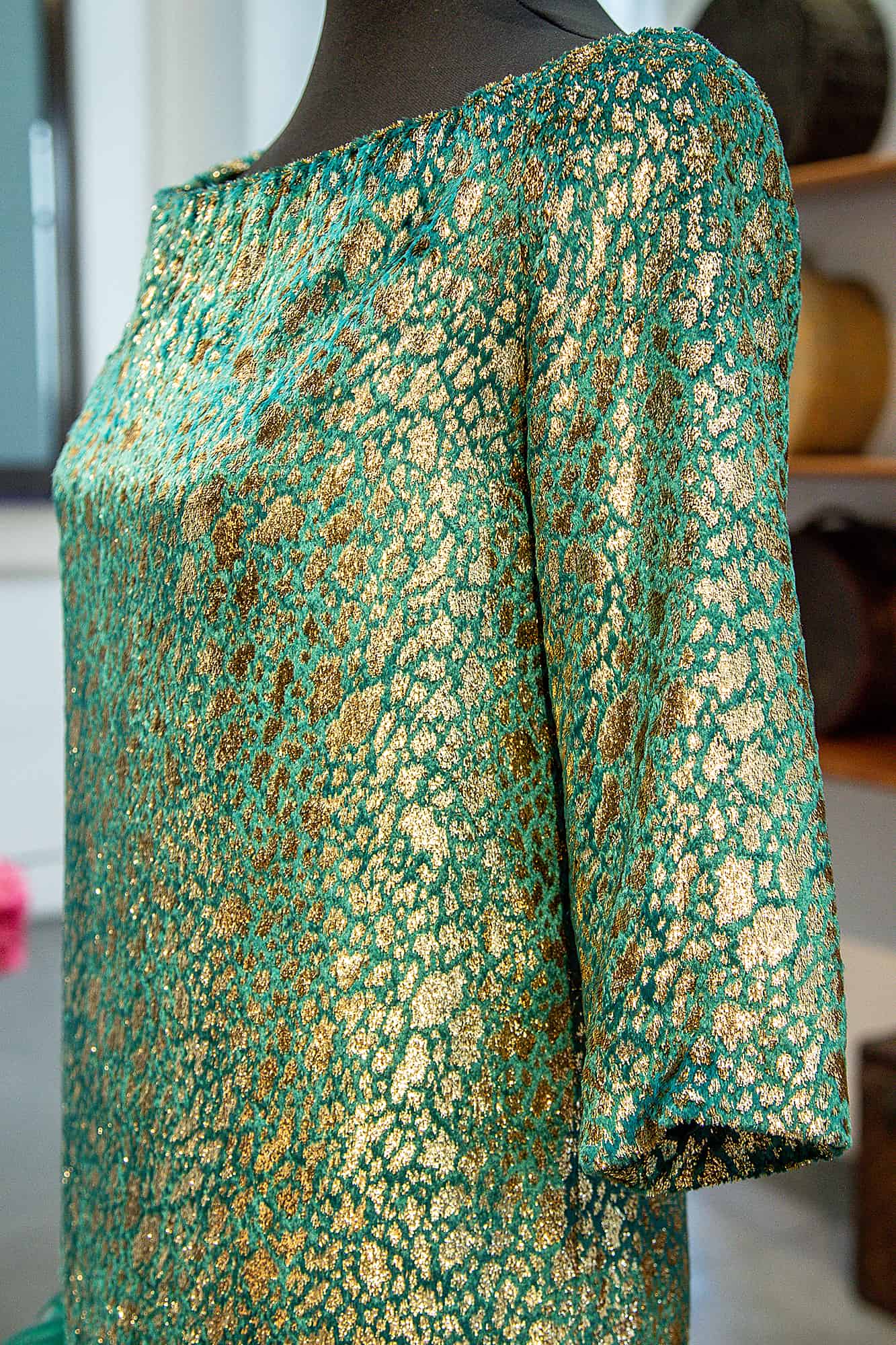
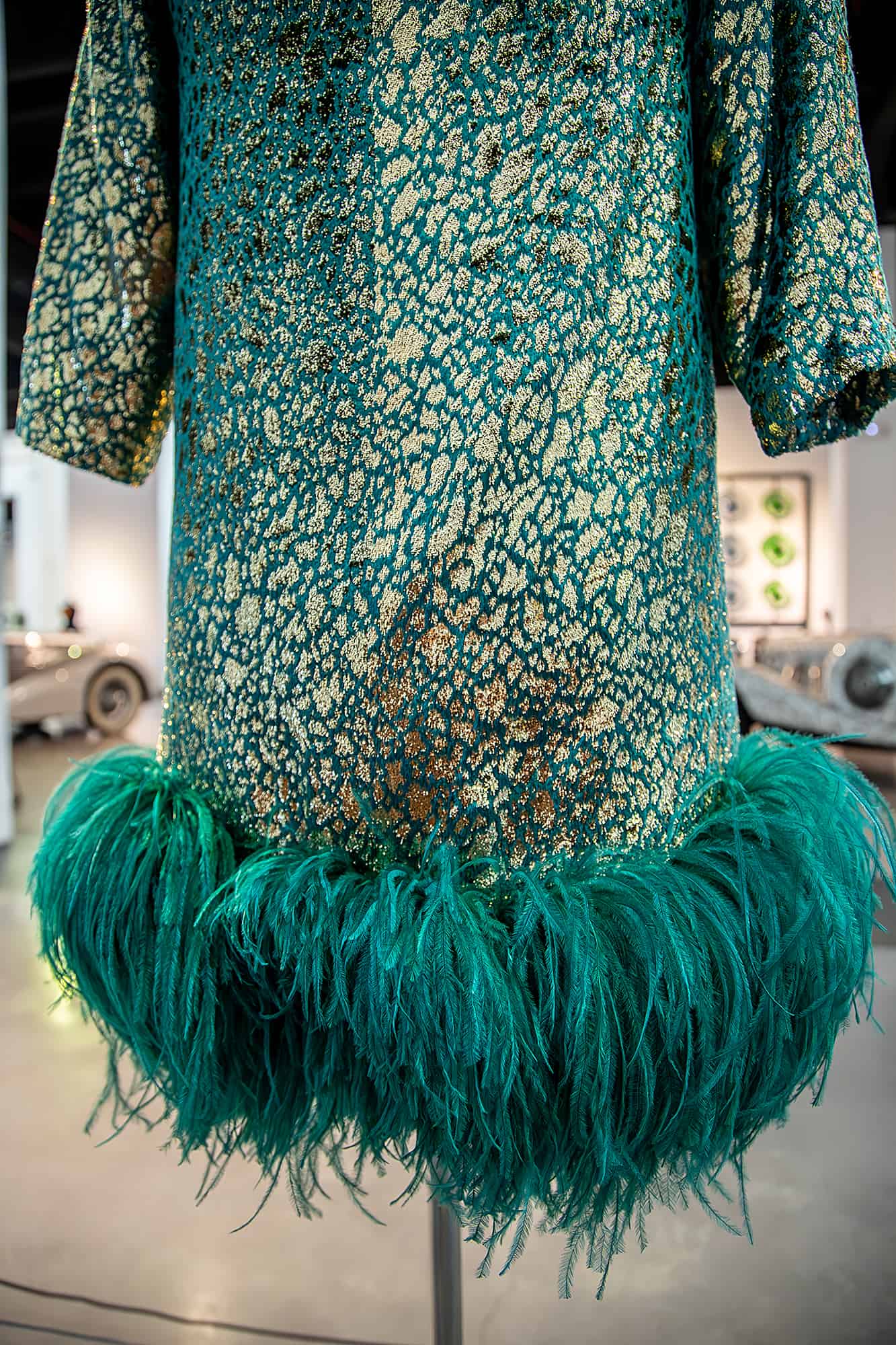
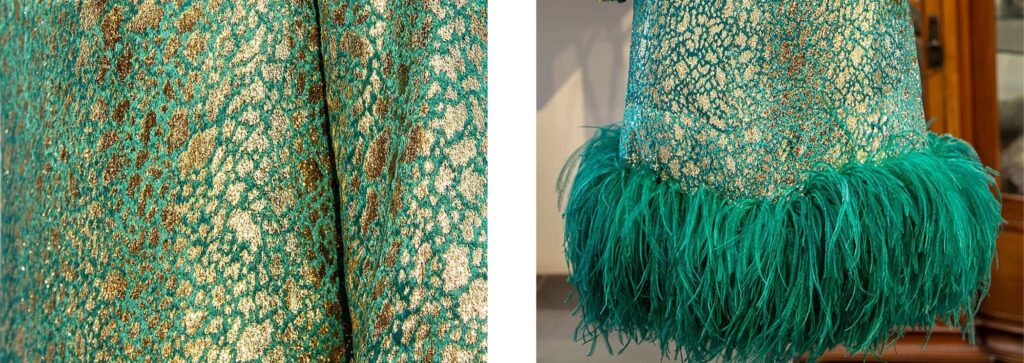
The A-line silhouette, the lurex and the ostrich-feathered hem of this mini-dress bear witness to the love affair between its creator, Pierre Cardin, and its original owner, Jeanne Moreau.
It comes from the private collection of the famous actress, whom Cardin met in 1961 and with whom he lived, in his own words, ‘a love at first sight, a passionate relationship that lasted four years, then a break-up that separated us for some time and then an unbreakable friendship’.
A curious fact about Pierre Cardin is that, in 1970, he was the only designer authorised to try on the original NASA spacesuit, which demonstrates his obsession with futurism and innovation in fashion.
Recently, fashion house Pierre Cardin has collaborated with the European Space Agency (ESA) to design training suits for astronauts, which will be used at the European Astronaut Centre in Cologne, Germany, in preparation for a lunar mission in 2026. This collaboration pays homage to Cardin’s iconic “Cosmocorps” collection from the 1960s, inspired by space travel.

Pierre Cardin stood out in the 1960s for his innovative and futuristic approach, challenging the conventions of traditional fashion. His avant-garde vision incorporated geometric shapes and unusual fabrics, such as plastic, positioning him as a pioneer of modern fashion. In that decade, his designs reflected the optimism of the space age and technology, uniting art and fashion.
In 1966, Cardin took the bold step of launching his first ready-to-wear line, democratising haute couture. His ability to fuse fashion with industrial design and his constant search for new forms made him one of the most influential figures of the time. His creations, full of solid colours and simple lines, were a reflection of the social and cultural changes that defined the 1960s.
Recently, fashion house Pierre Cardin has collaborated with the European Space Agency (ESA) to design training suits for astronauts, which will be used at the European Astronaut Centre in Cologne, Germany, in preparation for a lunar mission in 2026. This collaboration pays homage to Cardin’s iconic “Cosmocorps” collection from the 1960s, inspired by space travel.