






Styling
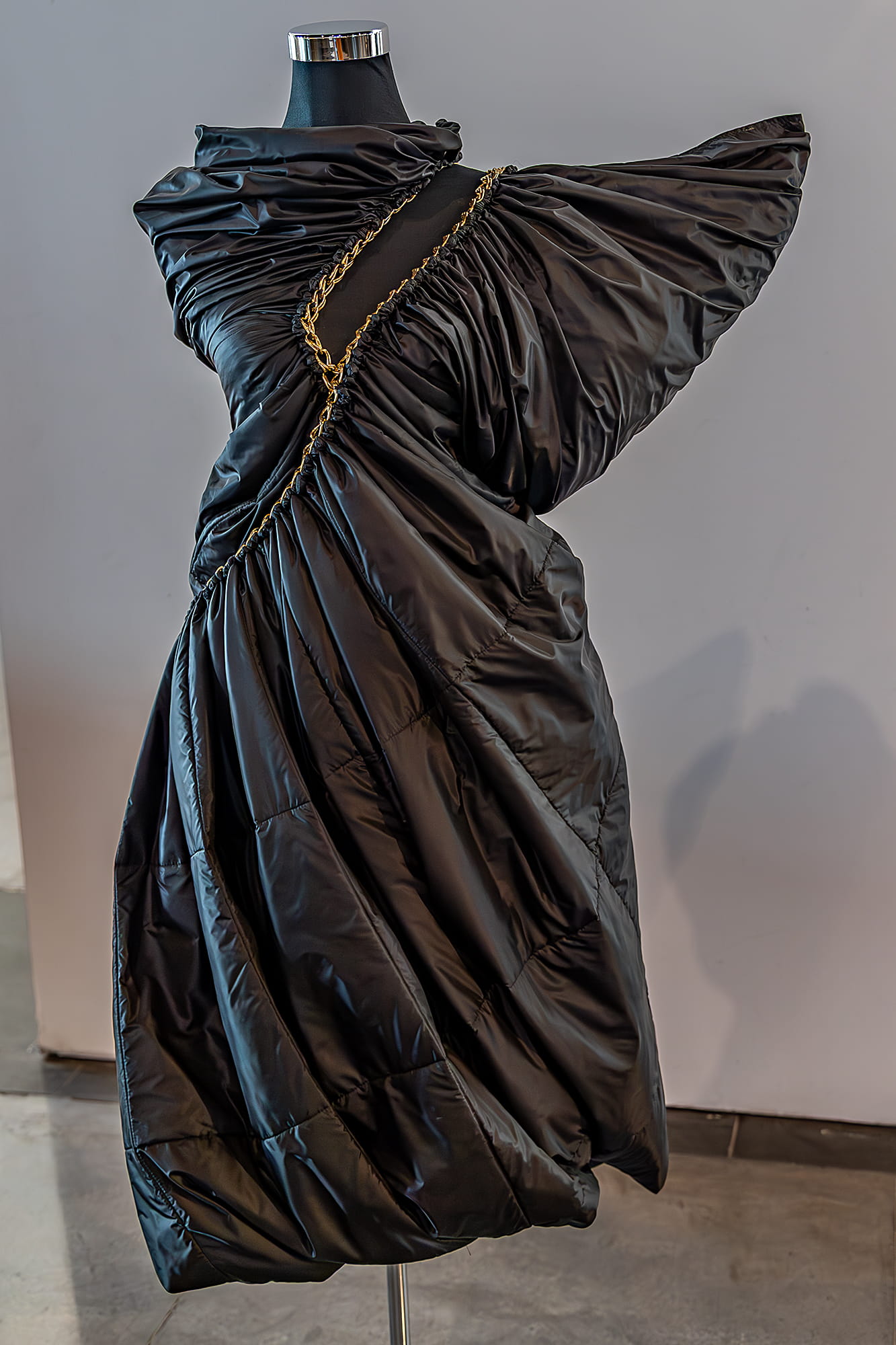
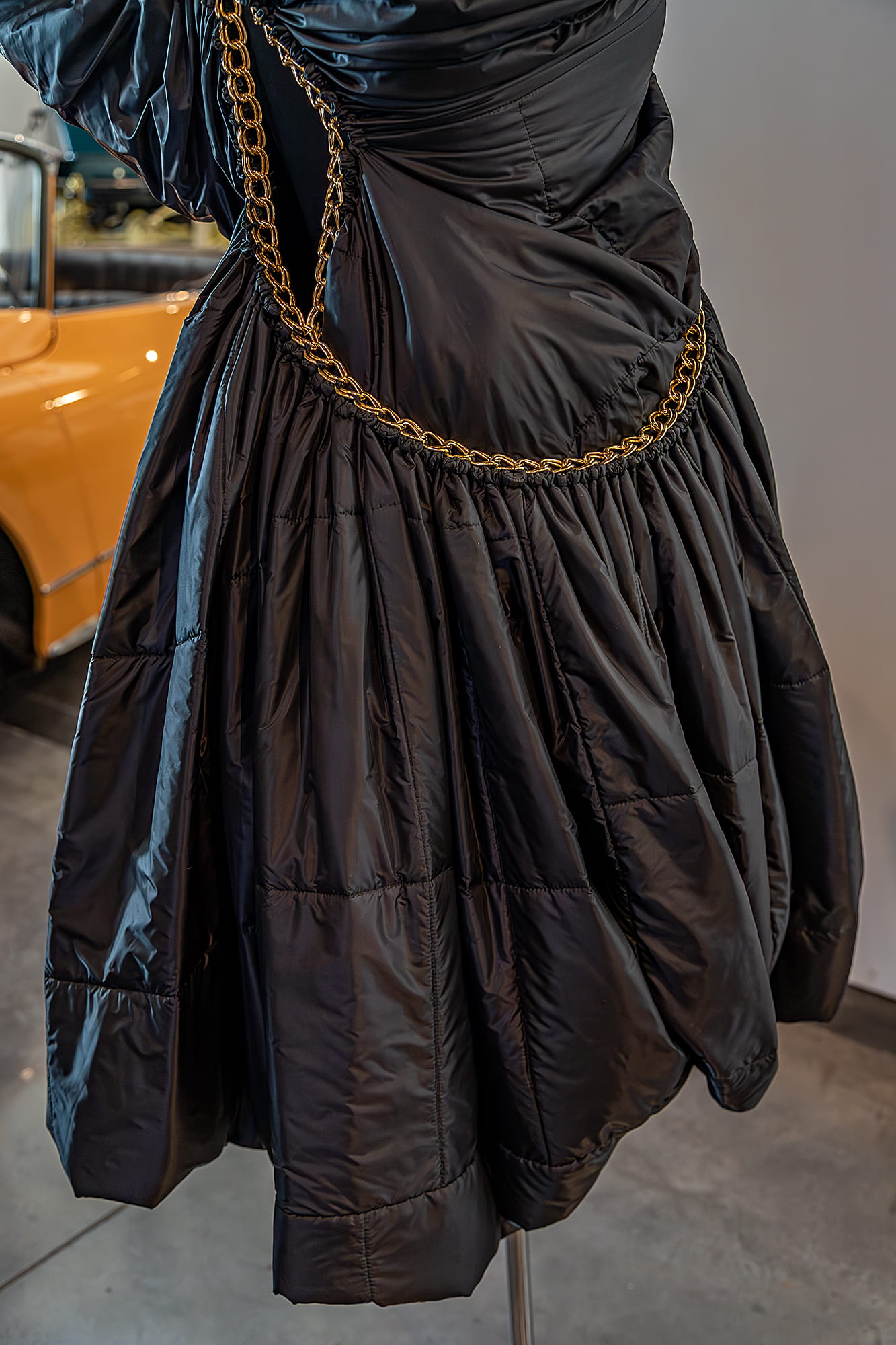
In particular cases, like this dress, the garment itself is created with interactive possibilities. Although it looks like an asymmetrical design, the reality is that this is not the only way it can be worn. On the catwalk, the model wore both sizes crossed, one over the other. She also has the possibility of wearing them uncrossed, which creates a more pronounced neckline.
The catwalk proposals are not definitive, personal style, at the moment of dressing or combining, is another key point that can even create new trends, as happens with street style and influencers. This vision and creativity have become so strong that, since the 90s, the figure of the stylist has emerged and is now present throughout the industry.
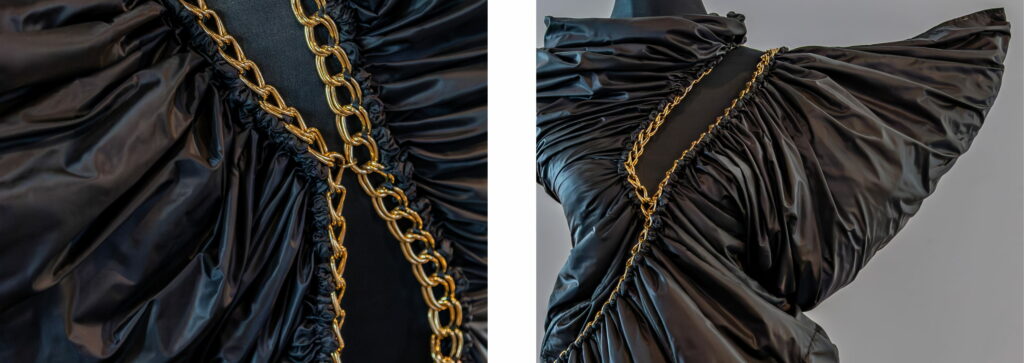
It is no coincidence that the fabric and structure of this dress may remind you of an anorak or down coat, as that is precisely the designer’s aim. The whole collection to which this garment belongs revolves around this idea, the deconstruction of such an everyday garment as the feather coat.

Junya Watanabe, Japanese designer and protégé of Rei Kawakubo, the brand’s founder, cemented his reputation within Comme des Garçons for his experimental and innovative approach, which would result in the creation of his own line within the brand. Known for his mastery of textile manipulation and use of avant-garde tailoring techniques, Watanabe explored the intersection between technology and fashion, challenging the conventions of traditional design.
His collections stand out for their geometric structures, deconstruction of silhouettes and use of unconventional technical materials in a futuristic vision that maintains the disruptive essence of Comme des Garçons, making him a key figure in the evolution of contemporary fashion.