




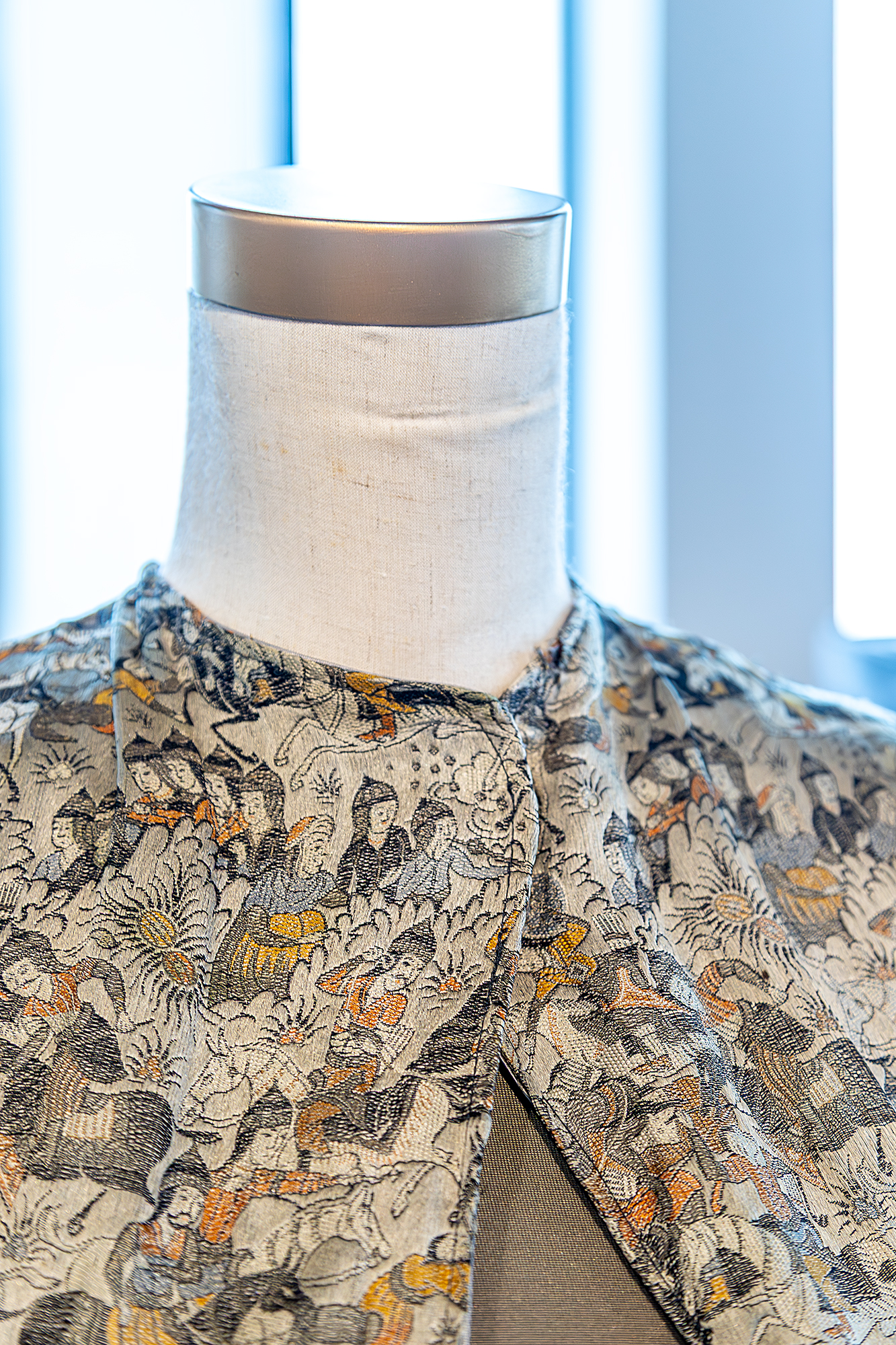
The inspiration of the East
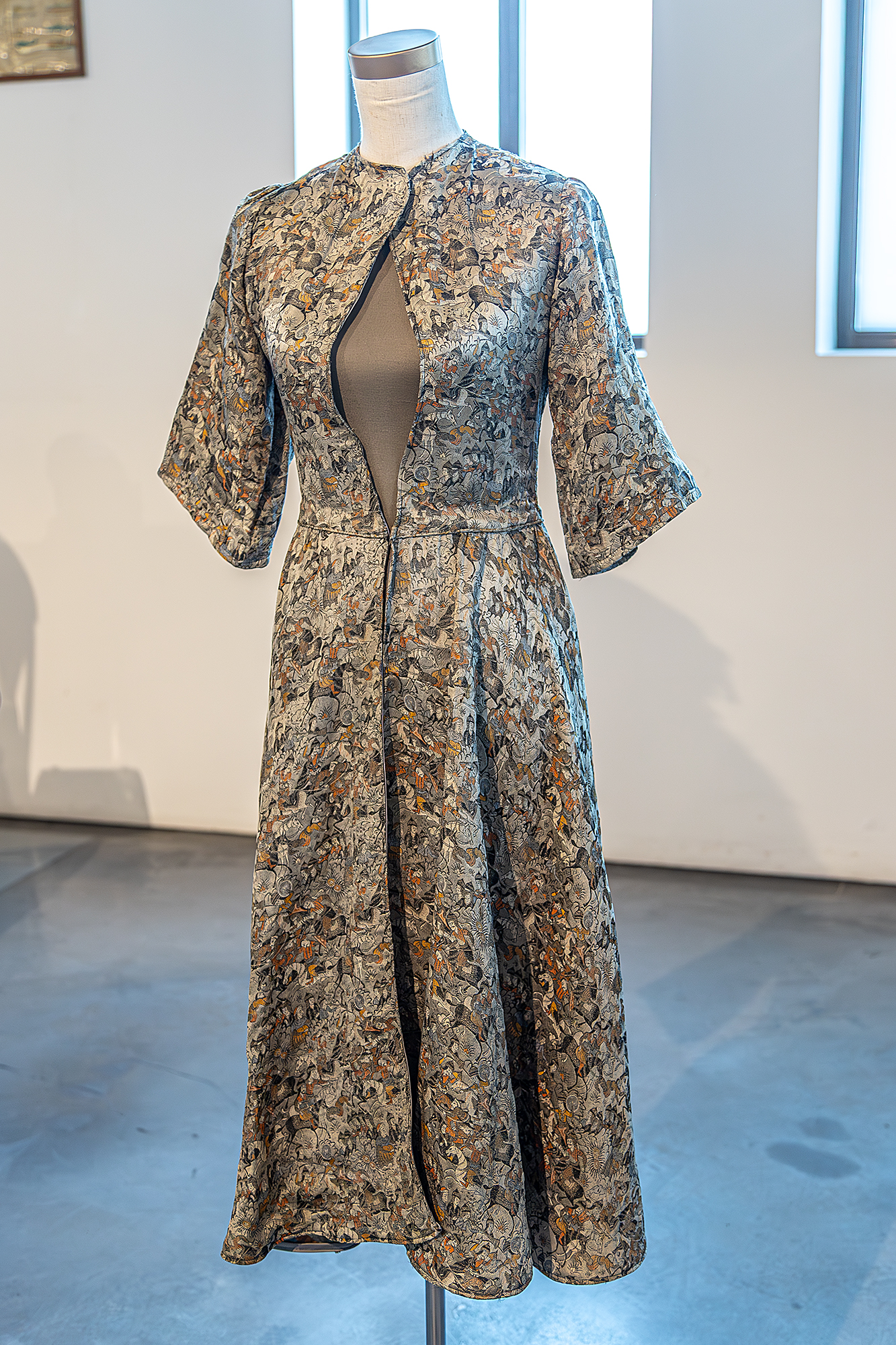
This piece, although created in the following decade, is still a reflection of how the Ballets Russes conquered, thanks to Sergei Diaghilev, the exquisite Parisian public with the nostalgic ballet Le Pavillon d’Armide. Later, with the premiere of Schéhérazade, Paris was captivated by the oriental costumes and the fascinating decorations created by the Russian painters Leon Bakst and Alexandre Benois. These events would be directly reflected in the sumptuous private parties hosted by Paul Poiret, who would popularise the style off-stage.
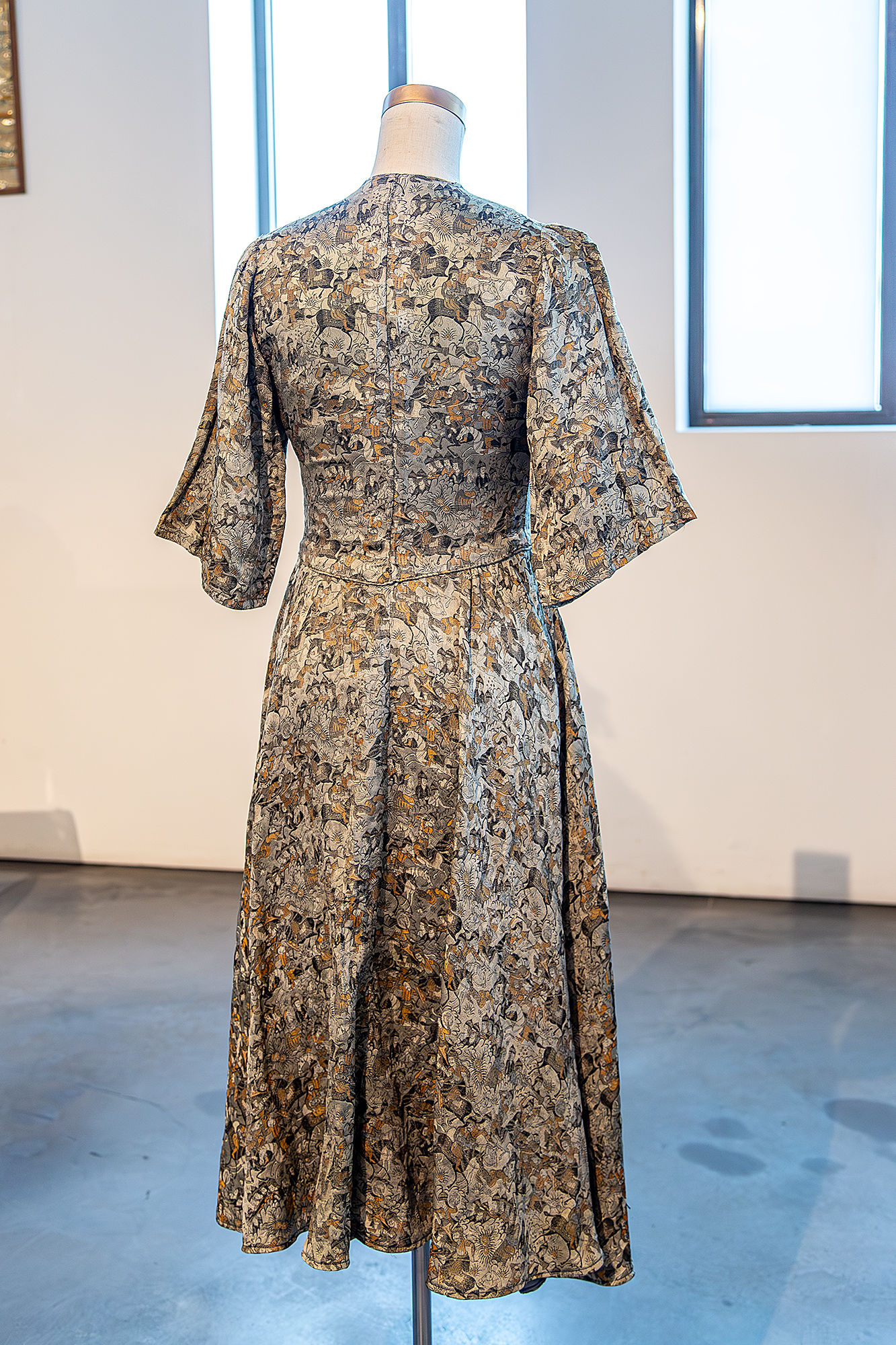
According to information from Kerry Taylor Auctions, a photograph of Gilbert Ren in this dress, dated August 9, 1921, can be found in the Paris Archives. Additionally, a sketch of the original garment can be found in the French Vogue magazine of 15 September 1921, page 11. Both documents show that it was originally trimmed with black fox fur, both on the collar and the edges of the sleeves and hem.
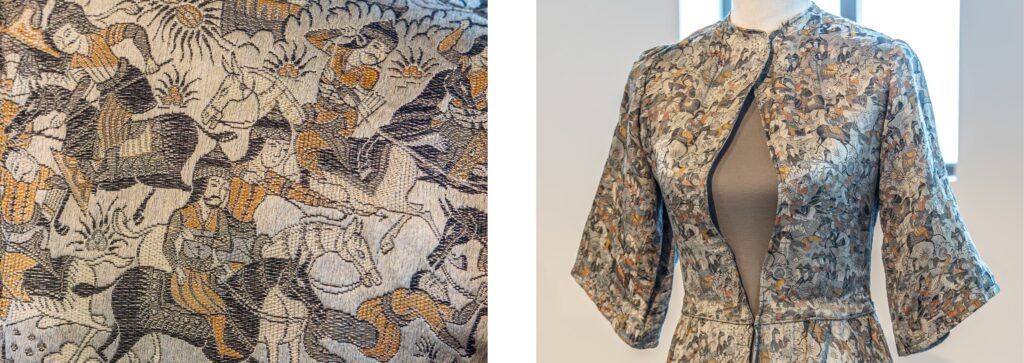
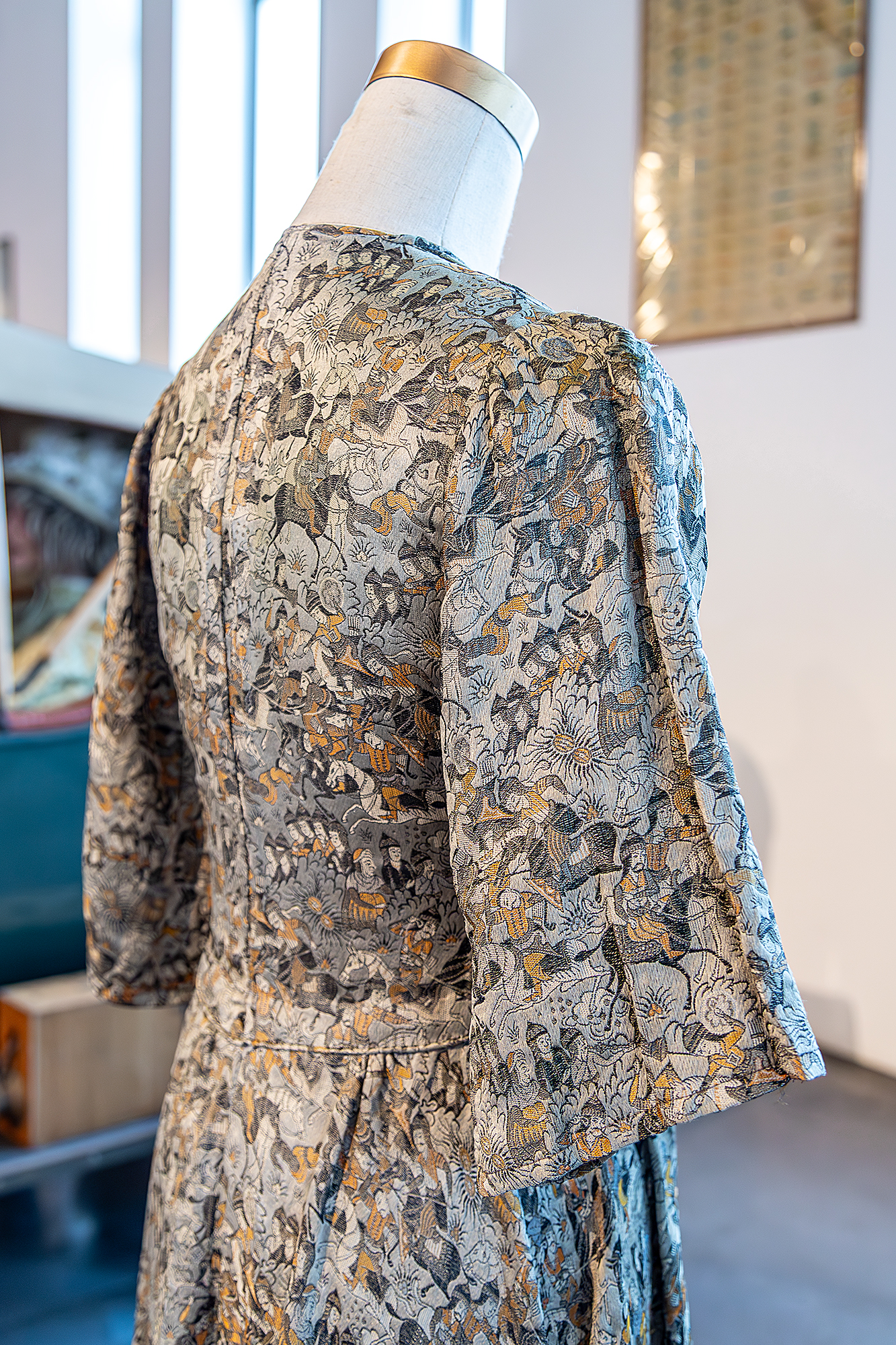
The fabric used to make this piece was designed by Raoul Dufy for Bianchini Ferier – ‘Chasse Persane’, 1921.
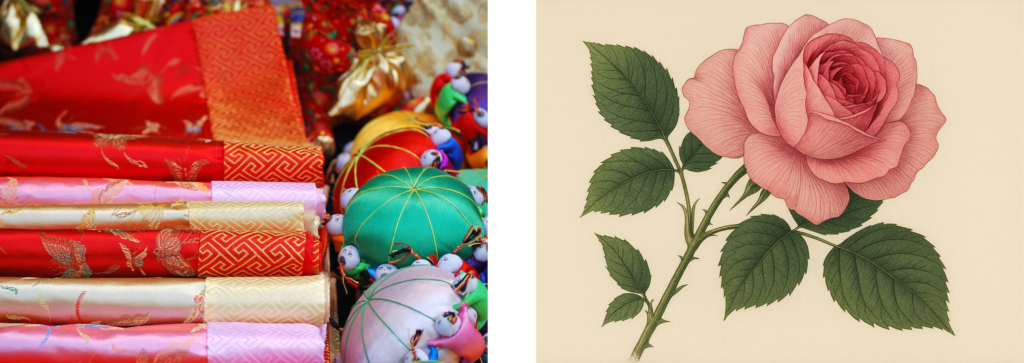
In addition to the brand label decorated with the Iribe rose, it has a second handwritten label on the reverse, No 44530, ‘Robe Patinerre, Baroness de Lagrange’, possibly referring to its former owner.
Paul Poiret was a fashion revolutionary in the early 20th century, known for freeing women from the corset and introducing more fluid silhouettes. His designs were inspired by oriental art and exotic shapes, such as bloomers and kimono coats. His creativity broke away from rigid Victorian structures, favouring freedom of movement and vibrant colours.
In addition to his talent as a couturier, Poiret was the first to understand fashion as a spectacle and an advertising tool. He created his own line of perfumes, ‘Parfums de Rosine’, anticipating the diversification of luxury brands. His legacy lives on as a forerunner of the modern designer, combining creativity and commercial strategy.