



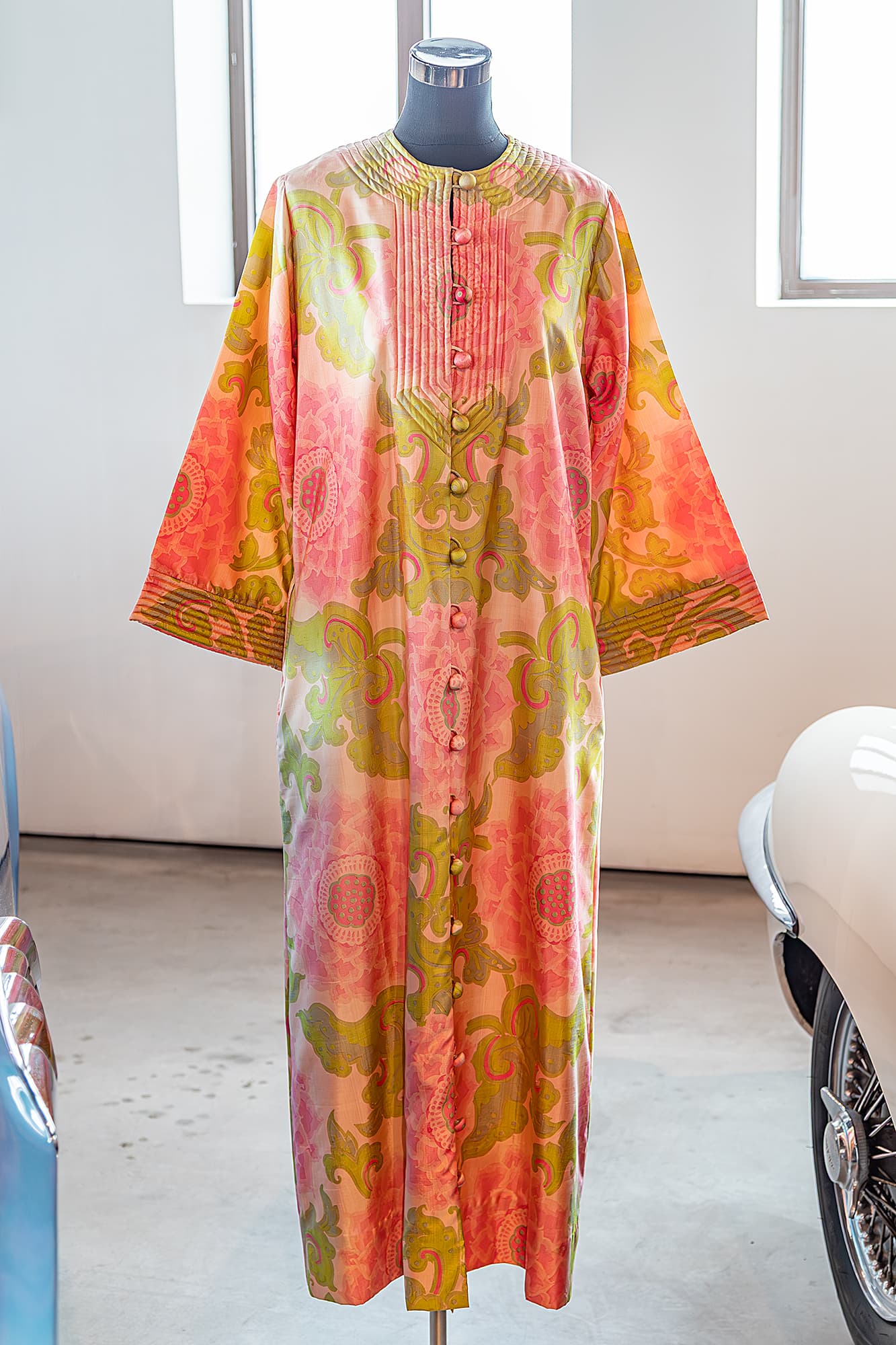

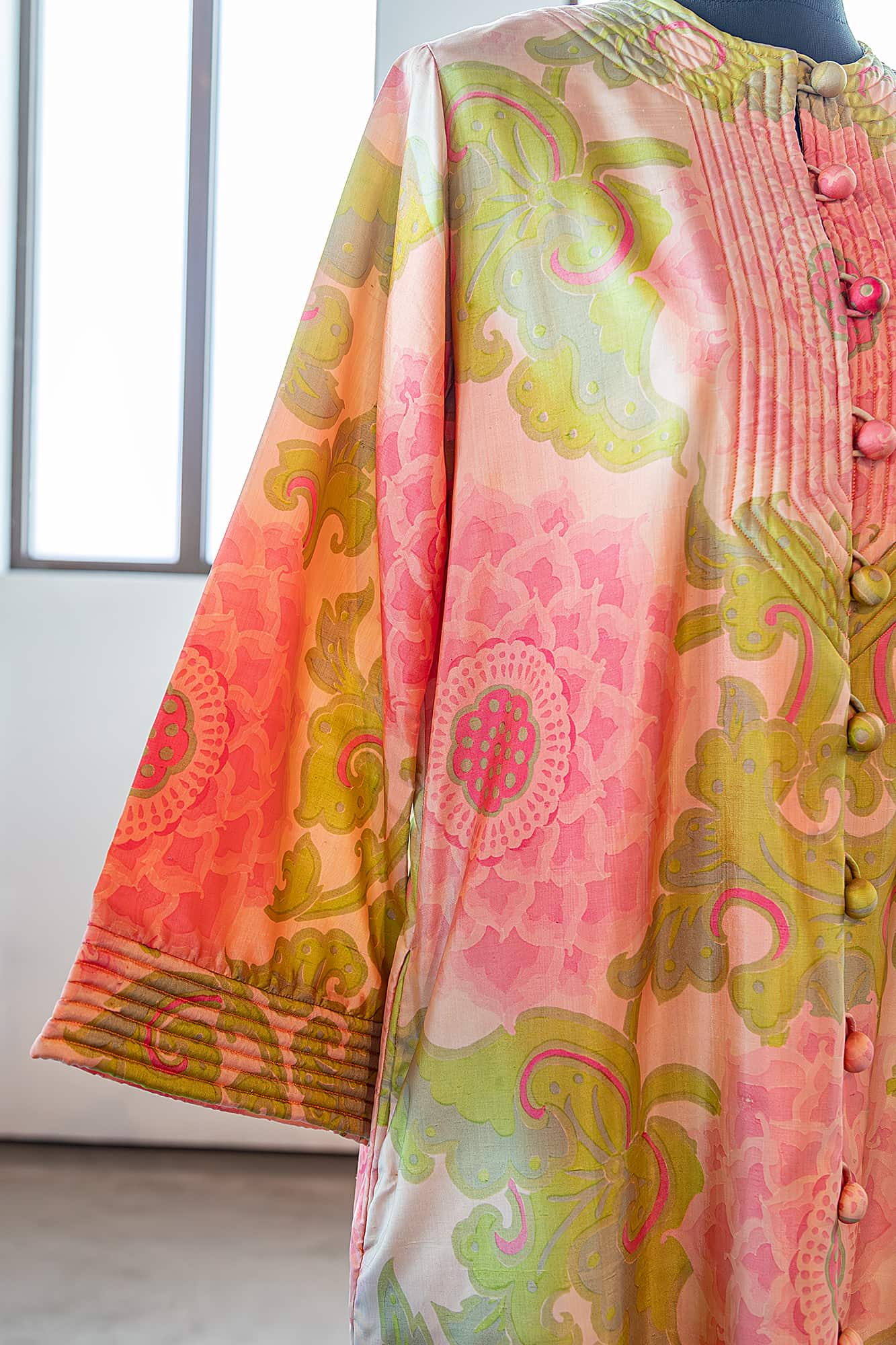
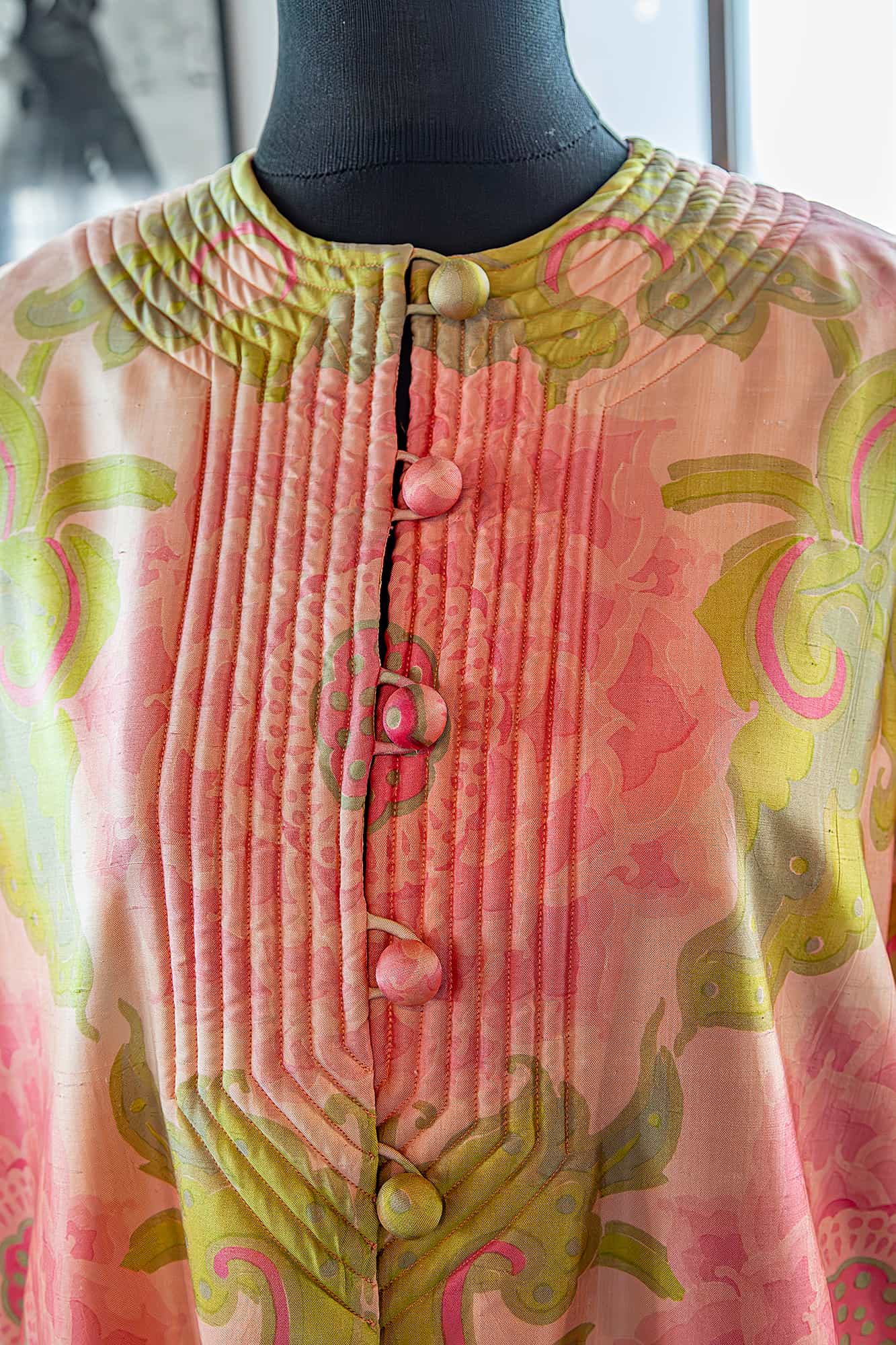

The fashion: not to be fashionable. As this kaftan reflects, orientalism and maxi dresses with prints that alluded to the last years of Flower Power became popular. Also, glam, punk, rasta, skinhead, disco with Studio 54, unisex, jeans and sportswear emerged. The ‘créateurs’ learnt their lesson and evolved at the same time. Ralph Lauren and Calvin Klein shape the concept of brand identity.
The 70s
This 70s kaftan by Pierre Balmain has a twin brother in the fashion capital: the Musée de la Mode de la Ville de Paris, located in the Palais Galliera, Paris, has a kaftan in its collection that looks exactly like this one.
The label on this kaftan indicates that it was made in Thailand, using only 100% Thai silk as the only material. The French couturier’s connection with the Southeast Asian country is not limited to the production of his kaftans, as he was in charge of making numerous outfits for Queen Sirikit, mother of the current King of Thailand.

Pierre Balmain began his professional career as an assistant in the fashion house of Edward Molyneux and then joined the Christian Dior team, where he honed his skills in designing elegant, structured garments.
From 1967, Balmain made a major career shift by launching his ready-to-wear line, anticipating the needs of a more accessible but equally sophisticated fashion. This transition allowed him to reach a wider audience, without sacrificing his reputation for luxury and quality. Throughout the 1970s, the house of Balmain remained a benchmark of Parisian fashion, maintaining its elegance and distinction in a world increasingly influenced by pop culture and youth. Although his final years were marked by health problems, his legacy endured, leaving an indelible mark on the history of fashion.