



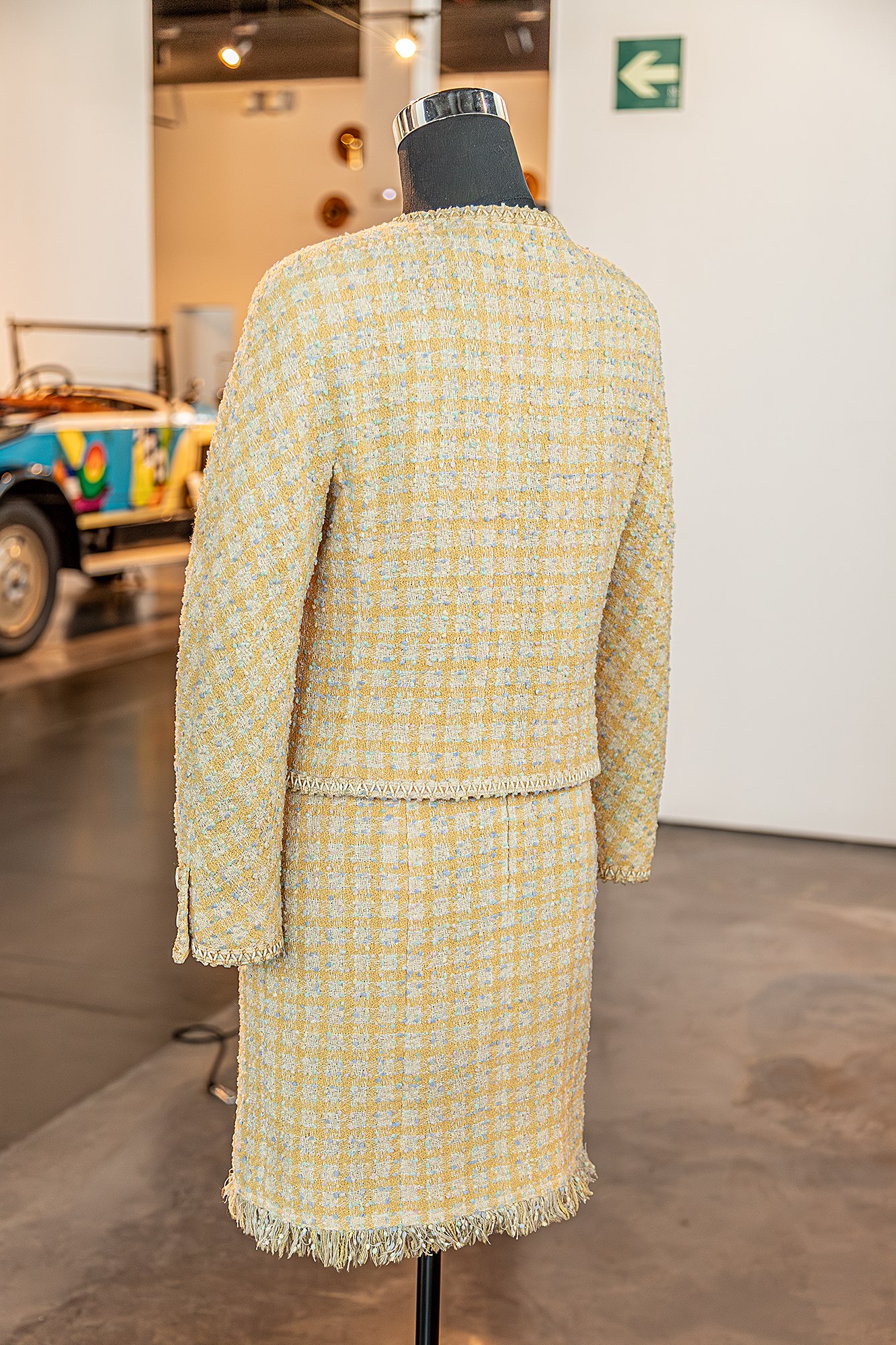
Less is more
With the stock market crash of 1929, the Roaring Twenties eventually consumed themselves and faded away. The tailor-made returned, now in the form of a sober suit jacket, either made of wool or, with the development of synthetic fibers, in more affordable fabrics. The waist cinched, the hats were bigger, and the haircut was slightly longer with sophisticated waves, everything always focused on practicality.
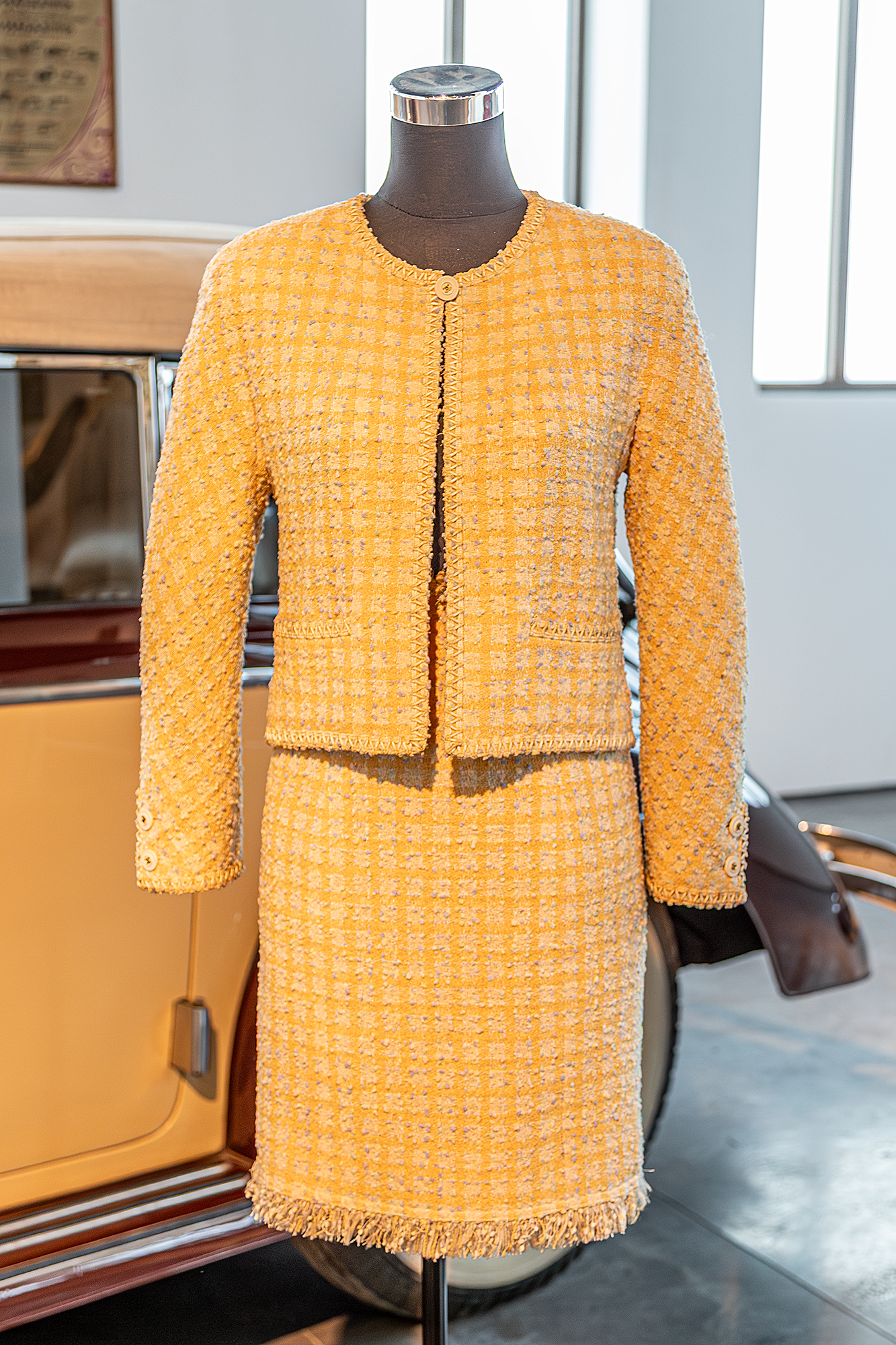
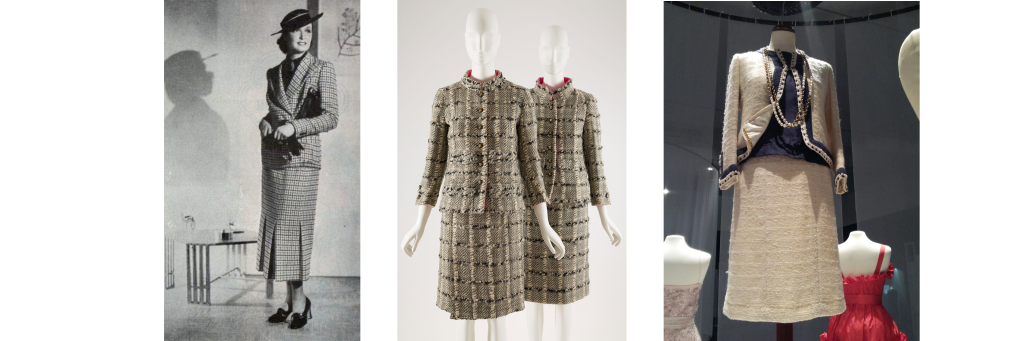
Although in this decade the two-piece suit was conceived as a pragmatic and discreet ensemble, it would gradually become so firmly established in women’s wardrobes that designers like Chanel made it their signature piece featuring their own codes.
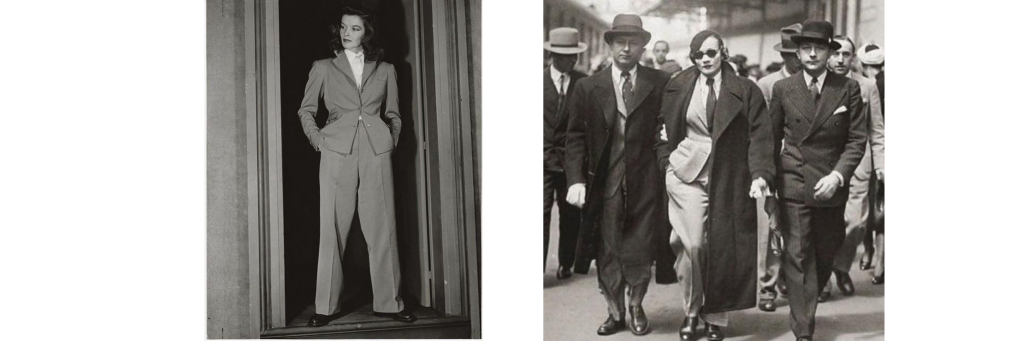
During this decade, the wearing of trouser suits by actresses such as Marlene Dietrich and Katharine Hepburn also became established. Although it was still considered scandalous at the time, with even some (debunked) rumors suggesting that Dietrich was arrested in Paris for doing so, their determination paved the way for women wearing trousers to become common and accepted.
Coco Chanel had a taste for perfection and detail that led her to design both clothing and accessories, which gave rise to what we know today as ‘total look’, an expression that Americans invented in the 1930s to define the Chanel universe.
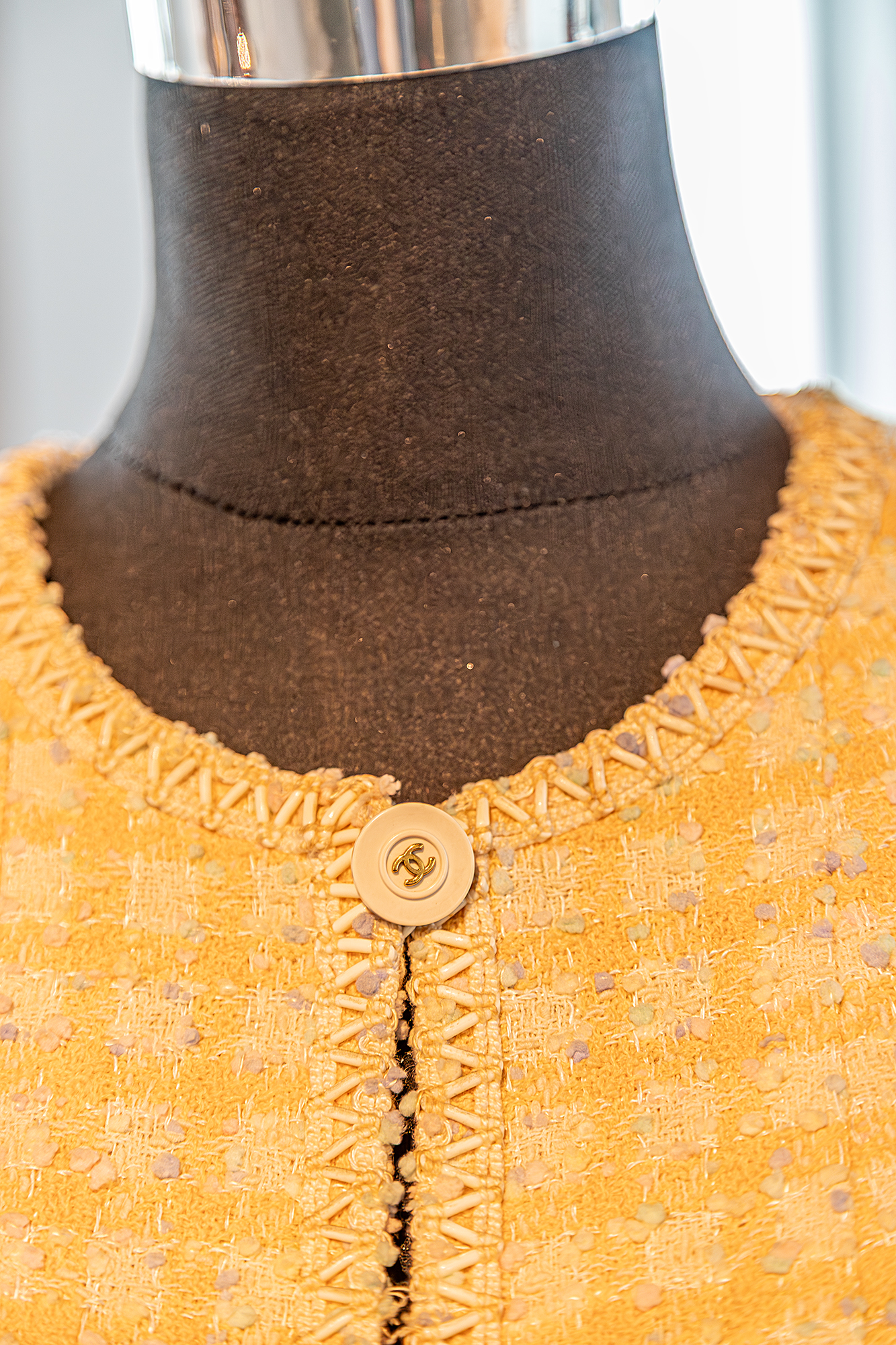
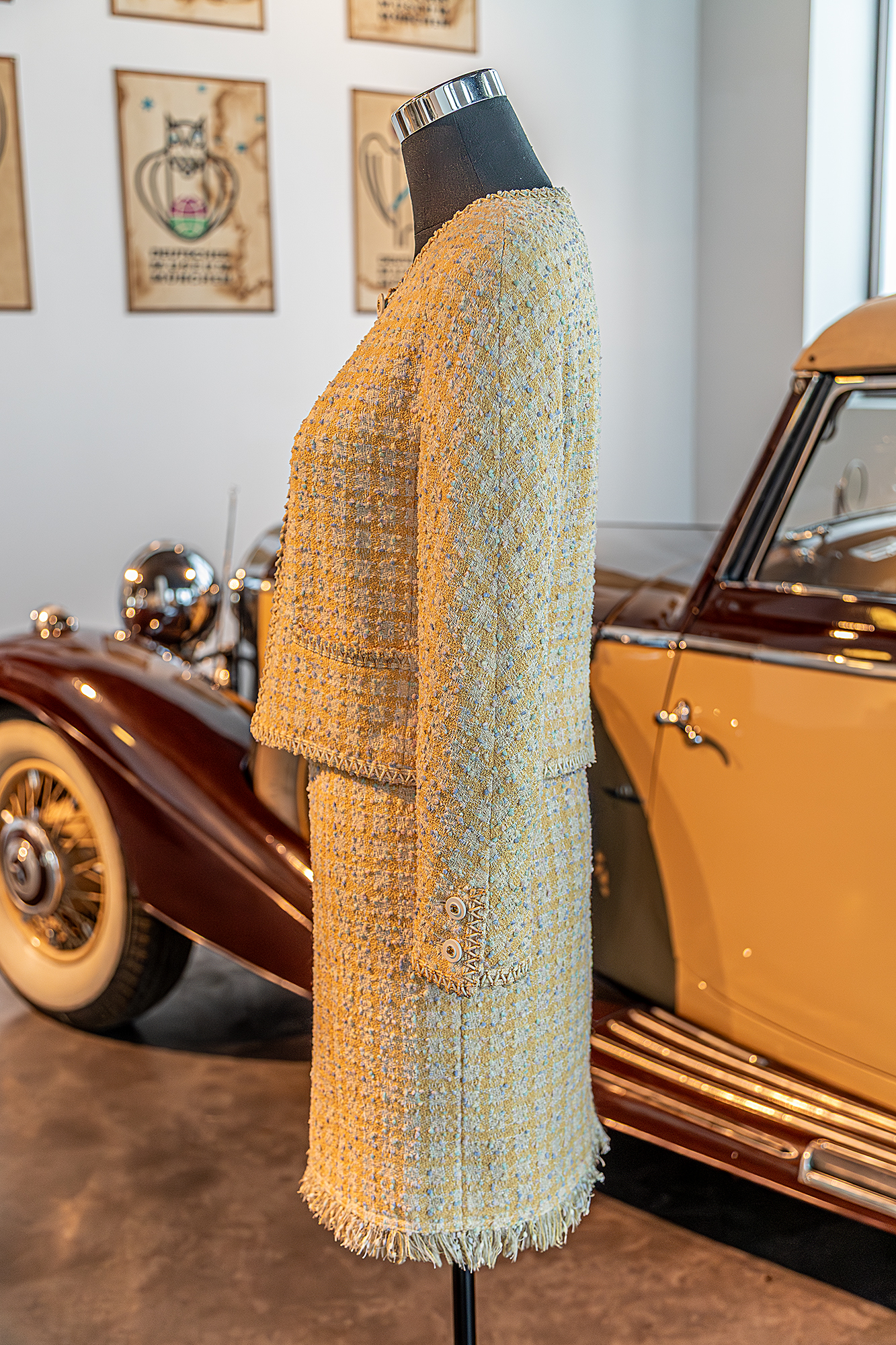
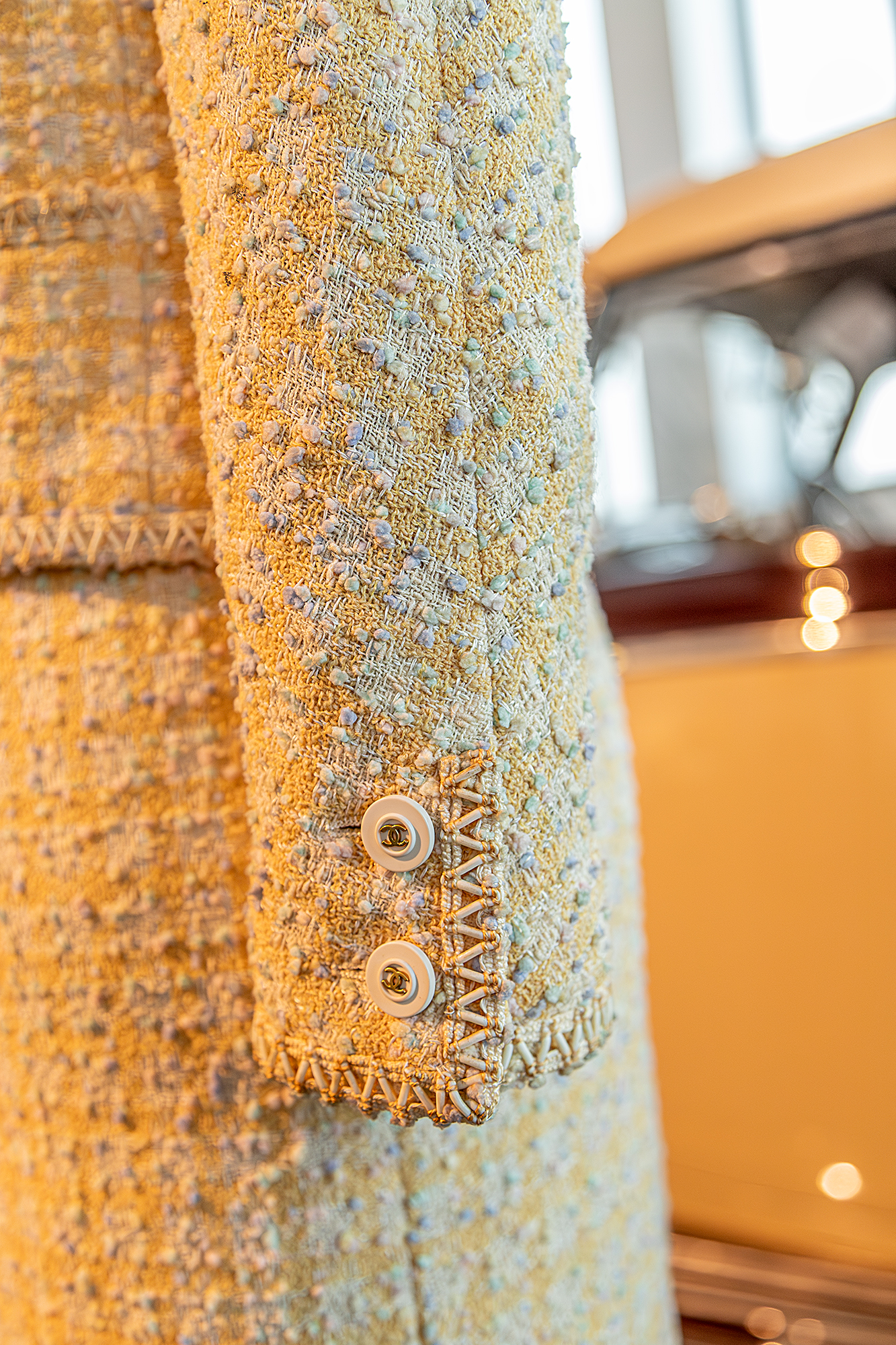
Karl Lagerfeld understood that the tweed suit was the pillar of Chanel’s identity and turned it into a timeless symbol within the house. By taking on the creative direction, he not only preserved the essence of this iconic design created by Coco Chanel, but constantly reinvented it to keep it relevant in contemporary fashion. Under his vision, the tweed suit ceased to be a simple garment of traditional elegance to become a canvas of innovation, adapting to each era without losing its essence.