



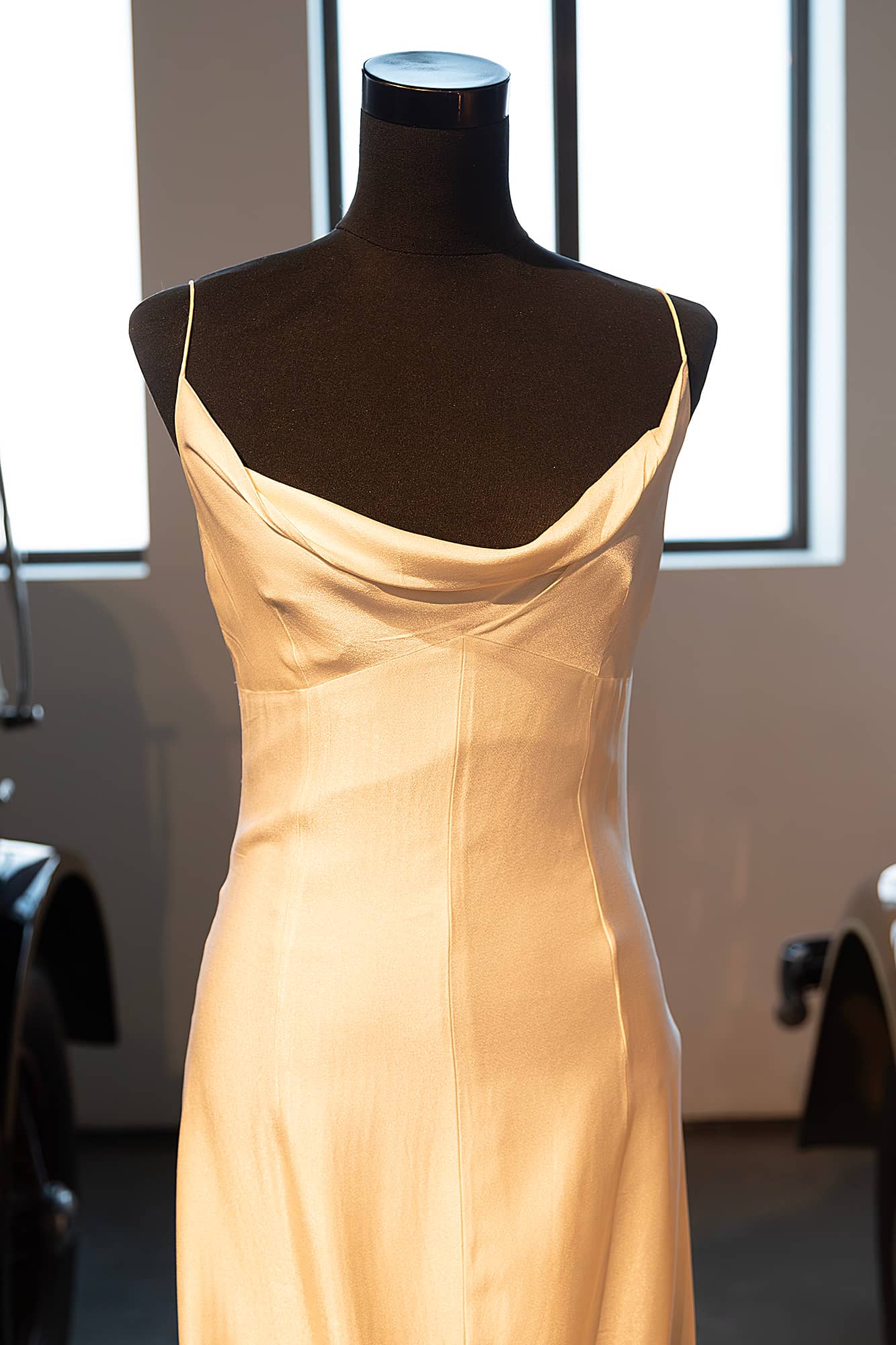
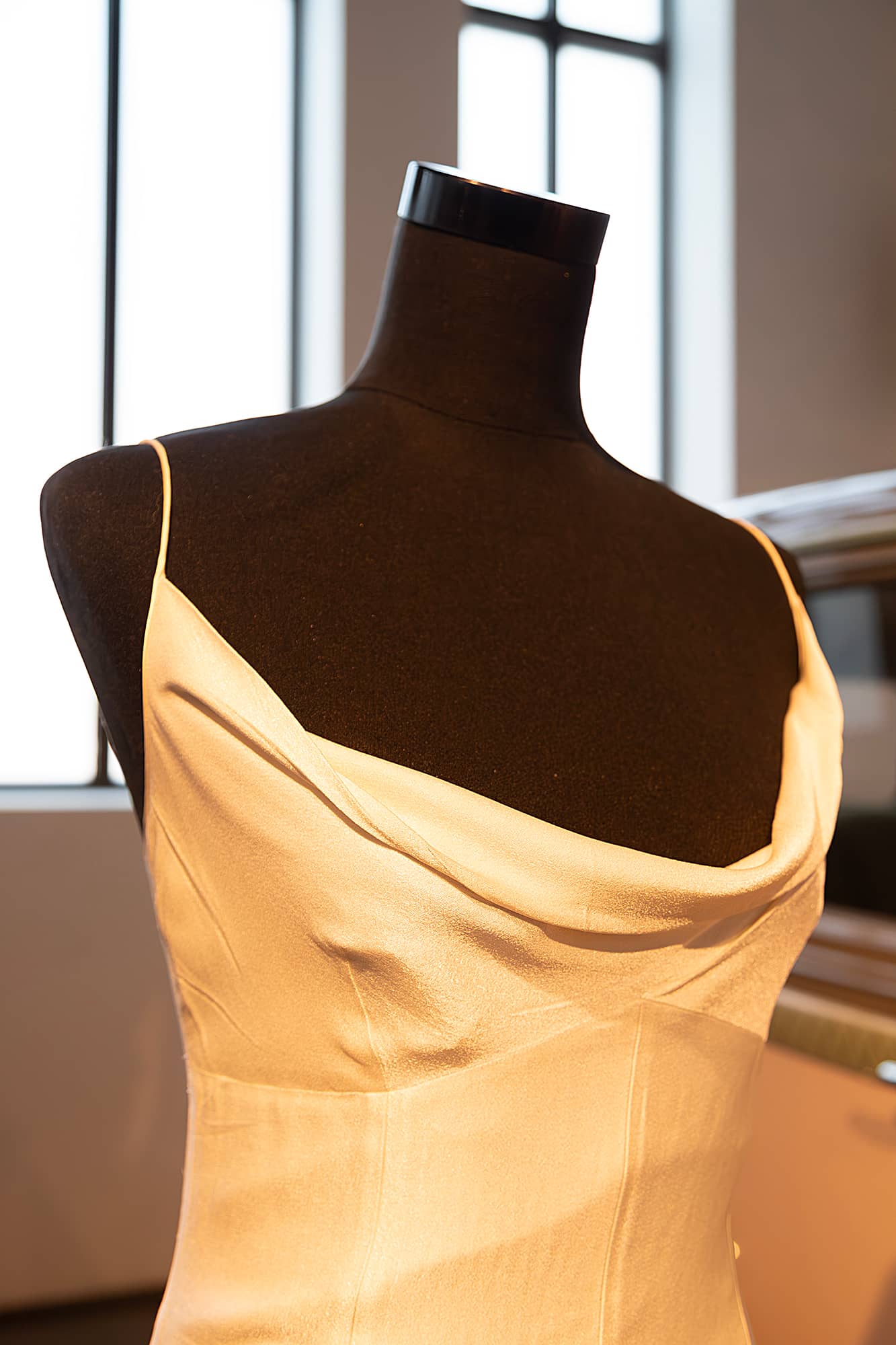
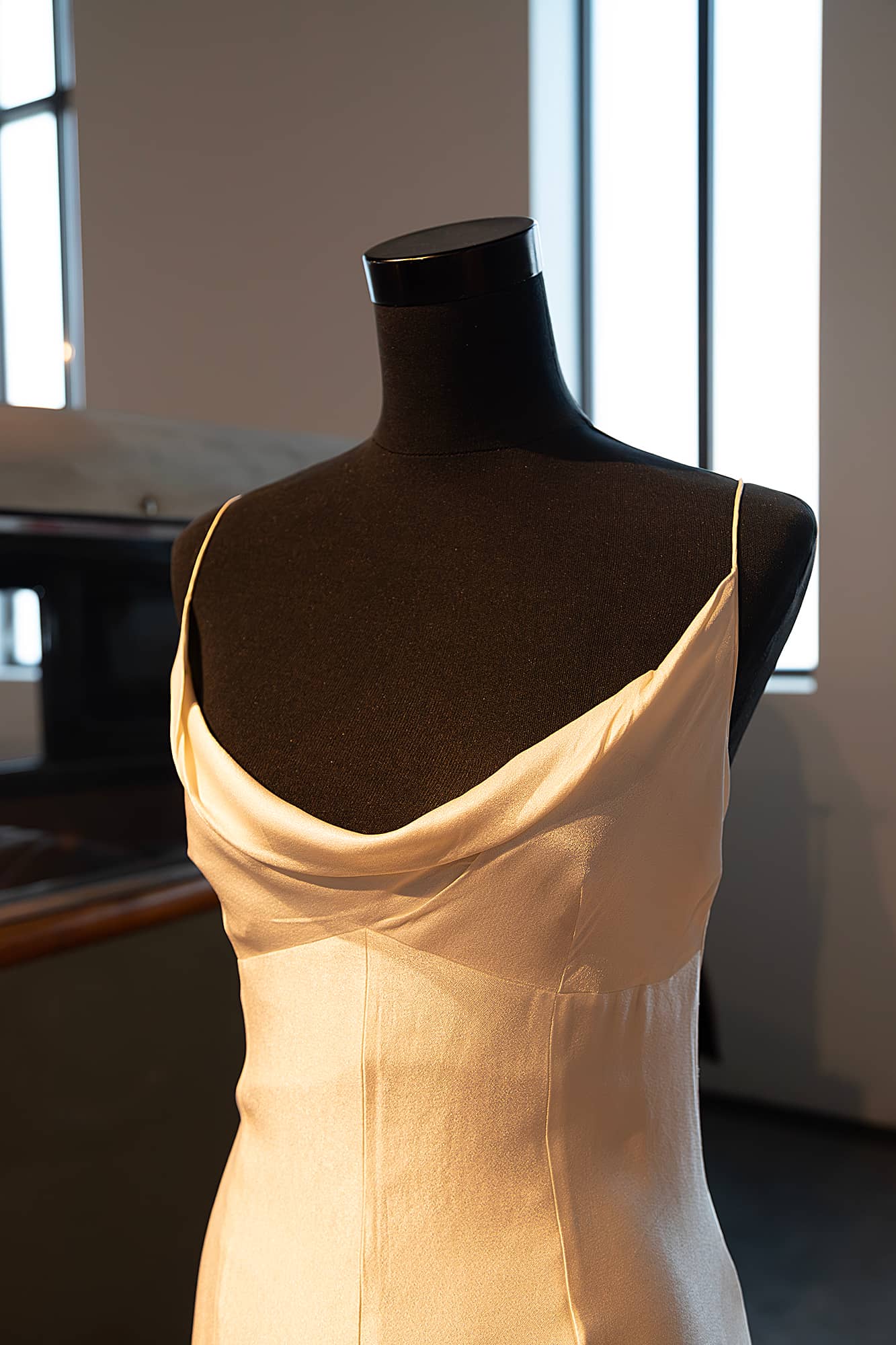
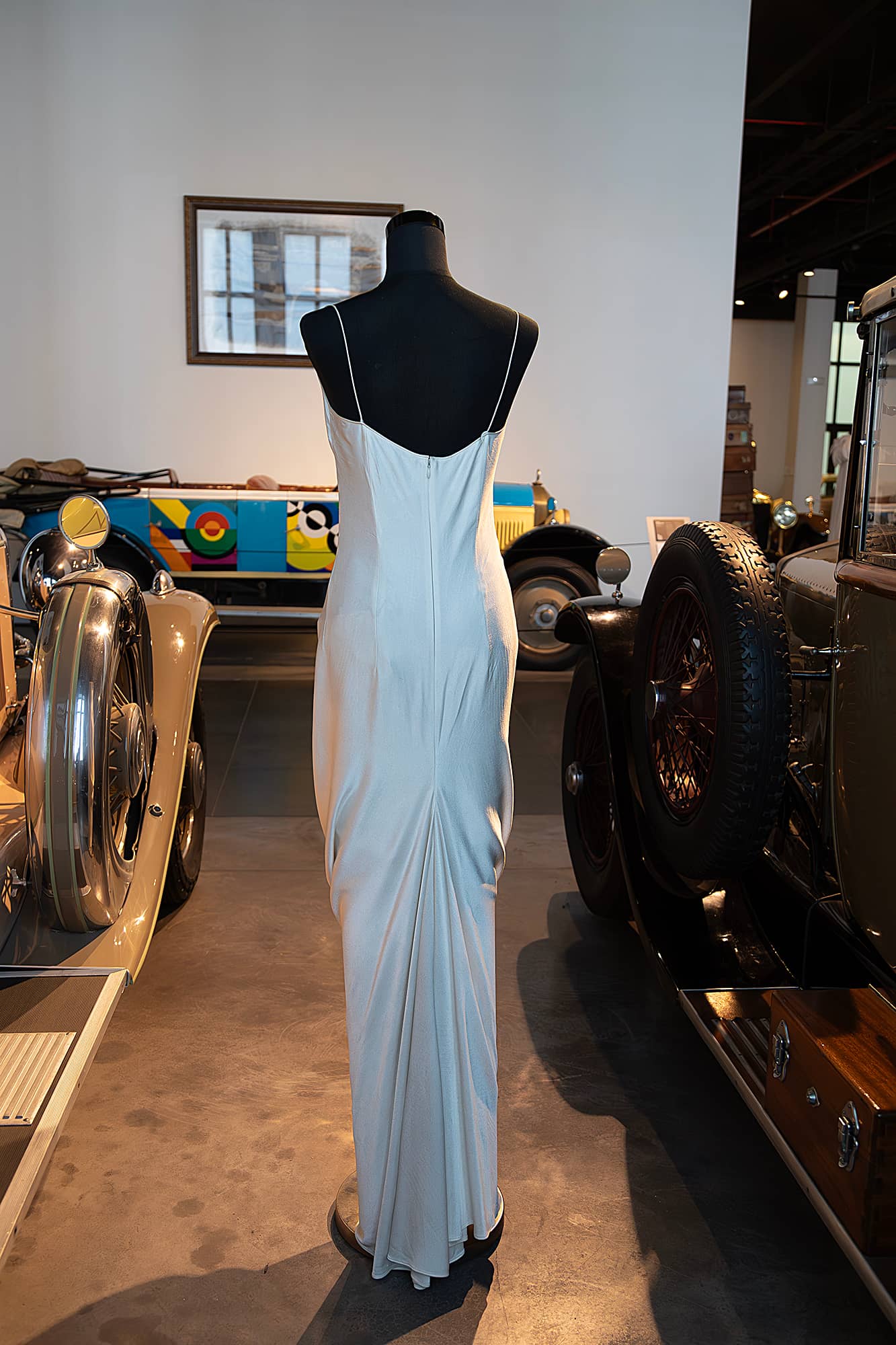
Vionnet and the bias cut
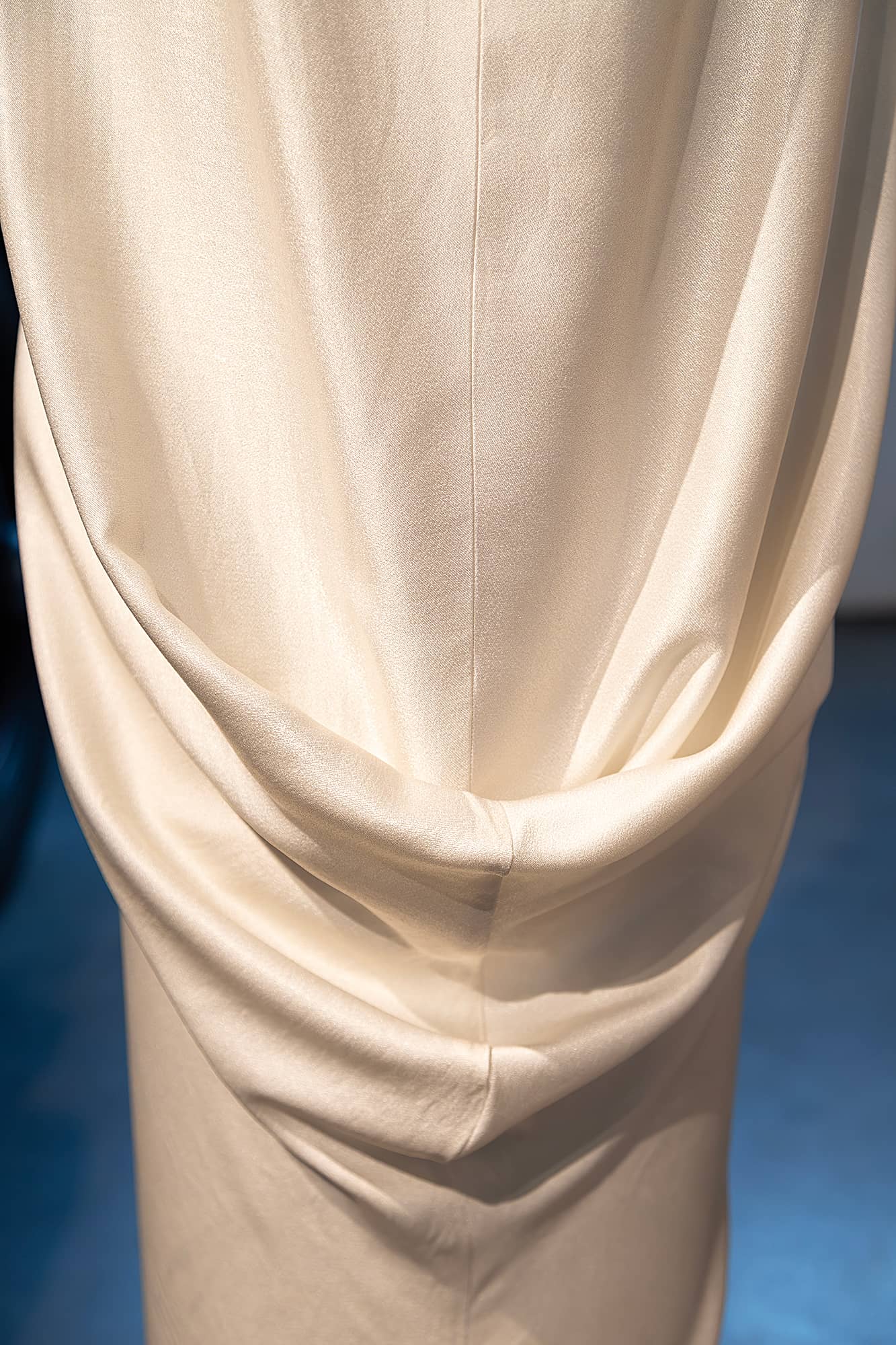
To make this dress, Galliano used the technique with which Madeleine Vionnet revolutionised fashion in the 1920s and 1930s, the bias cut, one of the most important innovations in fashion.
Although it was already used when cutting some small pieces such as collars, Vionnet contemplated the possibility of making the 45º turn of the main patterns, in order to achieve a much more fluid fall that adapts better to the figure. Although at the time the designer even went so far as to stamp her fingerprint on the labels to prevent copying, today, her technique is widely used and appreciated.
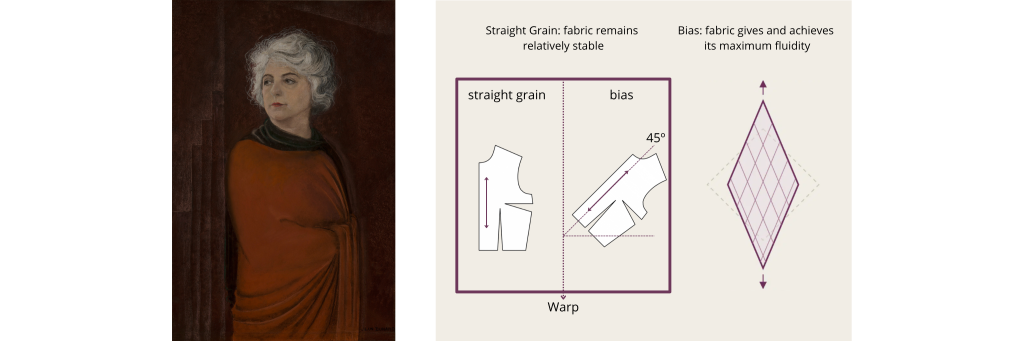
1. Berko gallery, CC BY-SA 4.0, via Wikimedia Commons
In general, historical references are a very characteristic feature of Galliano’s career. Not only is it the style of tailoring, in his time as creative director of Dior he used to appear at the end of his shows in outfits as theatrical as his own collections. Sometimes he would appear dressed as a pirate, a bullfighter or even with literary references. His final entrance on the catwalk became a spectacle in itself, reinforcing his image as a visionary and eccentric designer.
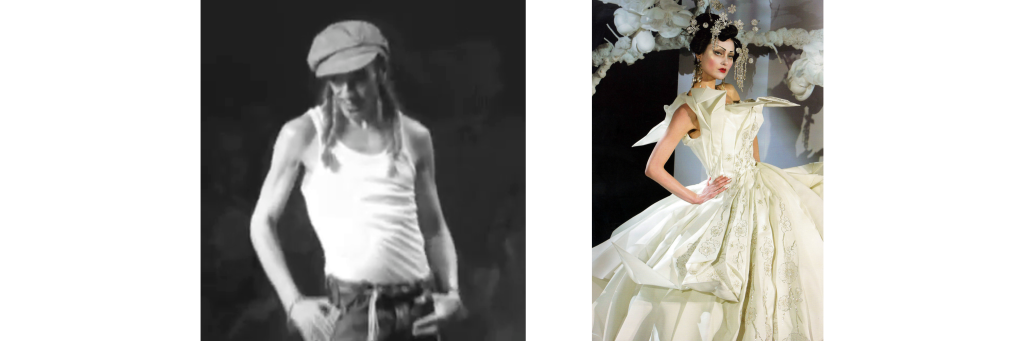
1. “John Galliano, 2010” SALLIANCE, CC BY 3.0, via Wikimedia Commons / 2. “John Galliano, Dior Couture S/S 2007” por Laura Loveday, CC BY-NC-SA 2.0
John Galliano (1960) is a Gibraltarian-born British designer, renowned for his exuberant and theatrical creativity. Trained at Central Saint Martins in London, his graduation collection already showcased his theatrical flair and fascination with history. After founding his own label, Galliano became known for his spectacular shows filled with narrative, historical references, and a dramatic approach. His talent earned him international attention even before taking on roles at haute couture houses, where he stood out for his ability to fuse haute couture techniques with avant-garde and romantic aesthetics.